Careers advice
How to become a truck driver in NZ: licence classes, pay and how to find work
Everything you need to know about licence classes, training, pay, and landing your first driving gig.
Last updated: 20 April 2026
Everything you need to know about licence classes, training, pay, and landing your first driving gig.
Trucking is the absolute backbone of Aotearoa. Without truckies, our supermarket shelves would be empty, our construction sites would sit silent, and our exports wouldn't make it to the wharf.
If you’re the type of person who loves the freedom of the open road, enjoys being your own boss behind the wheel, and doesn't mind a bit of hard graft, then a career in transport could be a perfect fit. Best of all, with New Zealand’s ongoing infrastructure projects and a growing logistics sector, there’s never been a better time to get started.

With high demand and competitive pay, now is the perfect time to start your trucking career.
Understanding the heavy vehicle licence classes
In New Zealand, you can't just jump straight into a massive B-train. You need to work your way up through the licence classes. Each class allows you to drive heavier or more complex vehicles.
- Class 1 (Full): This is your standard car licence. You need to have held this for at least six months before you can even apply for a heavy vehicle learner licence.
- Class 2 (Medium rigid): This is the entry point for most truckies. It covers rigid vehicles with a Gross Laden Weight (GLW) of more than 6,000kg but less than 18,000kg. Think delivery trucks or smaller tippers.
- Class 3 (Medium combination): This covers combination vehicles (a truck and trailer) with a Gross Combined Weight (GCW) of more than 12,000kg but less than 25,000kg.
- Class 4 (Heavy rigid): This allows you to drive rigid vehicles over 18,000kg. These are usually 3 or 4-axle trucks used in construction or heavy haulage.
- Class 5 (Heavy combination): The "big rigs." This class allows you to drive any combination vehicle with a GCW of more than 25,000kg. This is where you’ll find the long-haul line-haul work.
Pro Tip: If you're over 25, you can take an "accelerated" heavy licence course. This allows you to bypass the standard three-month waiting period between your learner and full licence for each class, provided you complete an NZQA-approved course.
Step-by-step: How to get your truck licence
Getting your licence involves more than just a driving test. Here’s the standard route:
- Hold your Class 1: You must have held your full Class 1 (car) licence for at least six months before you can apply for a Class 2 learner licence.
- Get a medical certificate: You’ll need a medical certificate from your GP to prove you’re fit to operate a heavy vehicle.
- Pass the theory: You’ll need to pass a heavy vehicle theory test at a licensing agent (like AA or VTNZ).
- Training and assessment: You can choose to wait six months on your learner licence before taking a practical test, or you can complete an approved accelerated course. These courses are highly recommended as they often combine theory and practical training in a much shorter timeframe.
What does a truck driver earn in NZ?
Money talks, and fortunately, trucking pay rates have remained competitive in 2026 due to the high demand for skilled drivers. Your earning potential increases significantly as you move up the licence classes.
- Class 2 drivers: You can expect to start around $27 – $30 per hour. This usually equates to $55,000 – $65,000 annually, depending on your hours.
- Class 4 drivers: Rates typically sit between $30 – $35 per hour.
- Class 5 drivers: Experienced drivers on Class 5 licences often earn between $35 – $45 per hour, with annual salaries ranging from $75,000 to over $100,000 for those doing long-haul or specialised work (like logging or fuel delivery).
Keep in mind that many trucking roles offer "overtime" rates or allowances for night shifts and nights away from home. Auckland and Wellington often offer the highest hourly rates to offset the cost of living, while regional roles in the Waikato or Canterbury provide steady work with a lower cost of living.
Training and courses to get you started
You don't need a degree to be a truckie, but you do need the right training. Most drivers choose to go through a specialised training provider rather than trying to do it all themselves. These providers help you with the theory (the heavy vehicle road code) and the practical driving skills.
If you’re looking for a reputable course to kickstart your career, check out these providers:
- TR Driver Training – One of the largest providers in NZ with locations nationwide.
- NZ Training Assessments – NZTA-approved provider specialising in heavy vehicle licensing for Classes 2 through 5.
- Safety 'n Action – One of NZ’s leading health and safety training organisations
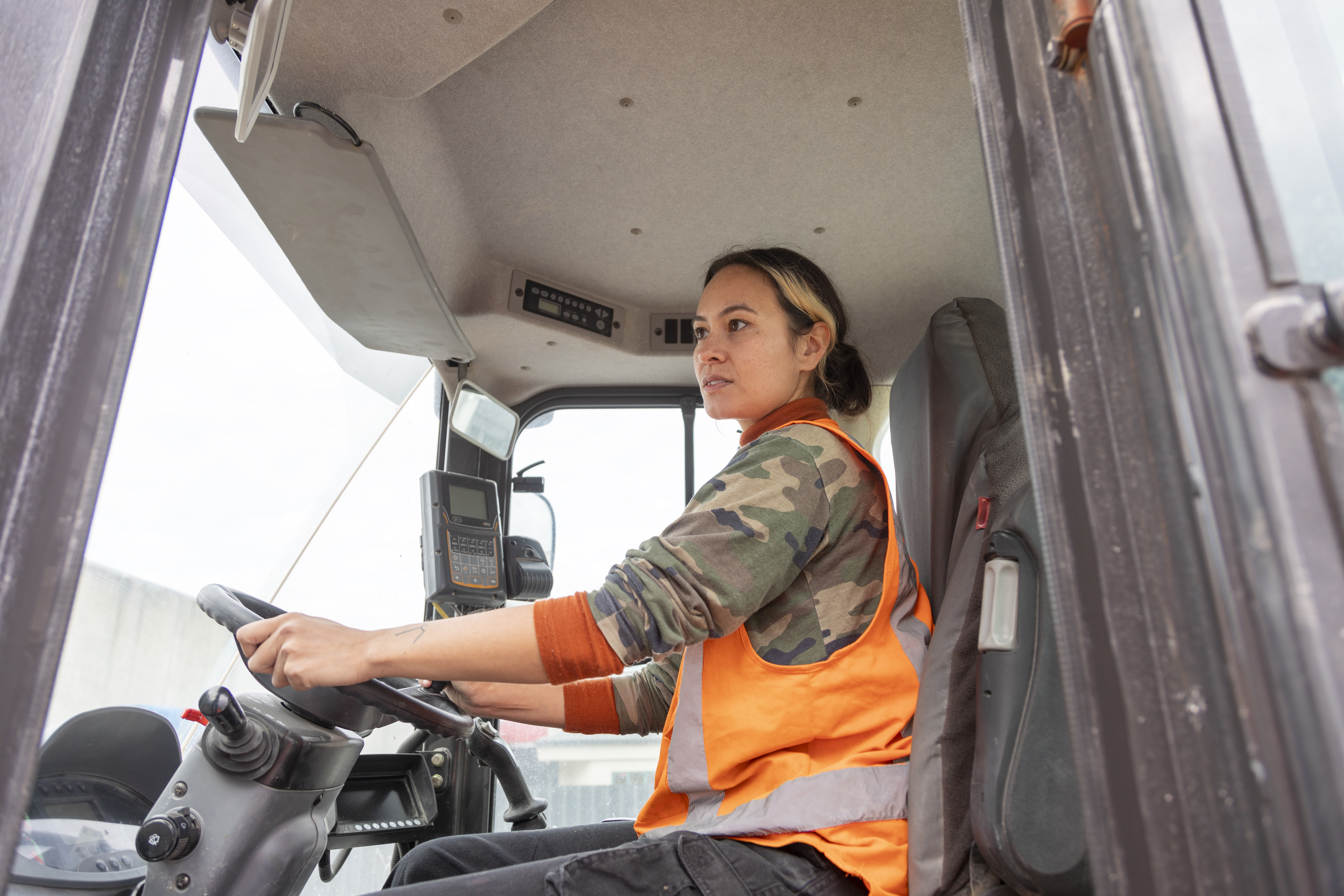
If you enjoy the freedom of the open road, a job as a truck driver could be the perfect fit for you
Skills you'll build (and why they matter)
Being a good truck driver is about much more than just steering a big machine. It’s a professional role that requires a specific skill set:
- Logbook and fatigue management: You’ll become an expert in managing your work time. Under NZ law, you must keep a precise logbook to ensure you aren't driving while tired.
- Mechanical sympathy: You’ll learn how to treat a million-dollar piece of machinery with respect, from checking oil levels to understanding air brake systems.
- Route planning: You’ll develop a "map in your head," learning which bridges have weight limits and which corners are too tight for a trailer.
- Patience and focus: Navigating a 50-tonne vehicle through Auckland traffic or over the Kaimai Ranges requires a level of focus that most car drivers can't imagine.
Where the jobs are
In demand areas include:
- Civil Infrastructure: With the government’s renewed focus on roading and infrastructure, there is a massive need for Class 4 and 5 drivers for earthmoving and roading projects.
- Logistics and Warehousing: As e-commerce continues to grow, "last-mile" delivery (Class 2) and line-haul (Class 5) remain high-growth areas.
- Agriculture: The recent shifts in the dairy sector mean reliable transport is essential for moving product from farm to factory and then to the ports.
How to land your first trucking job
The best way to get started is to get your Class 2 licence and a couple of "endorsements." An F endorsement (forklift) or WTR (Wheels, Tracks, and Rollers) makes you much more valuable to an employer because you can help load the truck or move machinery on-site.
Don't be afraid to start in a "storeperson/driver" role. Many companies will hire you to work in the yard and drive a smaller truck, and once they see you’re reliable, they’ll often pay for you to get your Class 4 or 5 licence. It’s a win-win.
Ready to hit the road? Start searching for truck driving roles on Trade Me Jobs today.
Author

Other articles you might like