Discover
The Circular Economy Report of Aotearoa 2026
Trade Me's Circular Economy Report reveals how Kiwi shift to buying and selling secondhand items.
Last updated: 12 February 2026
Since 2019, we have been tracking the journey of the circular economy in Aotearoa. Our latest findings show that Kiwi are increasingly turning to the second-hand market to navigate a tough economic climate, keeping millions of items in use for longer.
Whether it's finding a great deal or offloading unused items for extra cash, the sense of excitement for trading pre-loved goods remains strong across the country. At its simplest, a circular economy, or ōhanga āmiomio, is about giving items a second life and ensuring good things stay in use.
Our seventh annual report, powered by Trade Me Marketplace, provides a comprehensive snapshot of how 4,000 Kiwi are engaging with this $5.2 billion industry.
The $5.2 billion opportunity
The 2026 report reveals that Aotearoa’s circular economy is worth an impressive $5.2 billion. Every household is essentially sitting on a treasure trove of items they no longer need or want.
Across the country, there are an estimated 76 million unwanted items available for sale, with a collective value of over $5.2 billion.
Key highlights:
- High participation: 83% of Kiwi have bought a second-hand item in the last six months.
- The hidden goldmine: On average, each person holds 19 items ready to offload, which could unlock approximately $1,300 in cash.
- Decluttering vs. dollars: While 43% of sellers are motivated by needing extra money for living expenses, the number one reason Kiwi offload items is to clear clutter (70%).
- Cost of living impact: A significant 64% of Kiwi report that the cost of living has made them consider buying or selling second-hand more often, a 4% increase from last year.
- The "green" factor: Sustainability remains a key driver, with 32% of Kiwi choosing second-hand specifically to be more environmentally conscious.
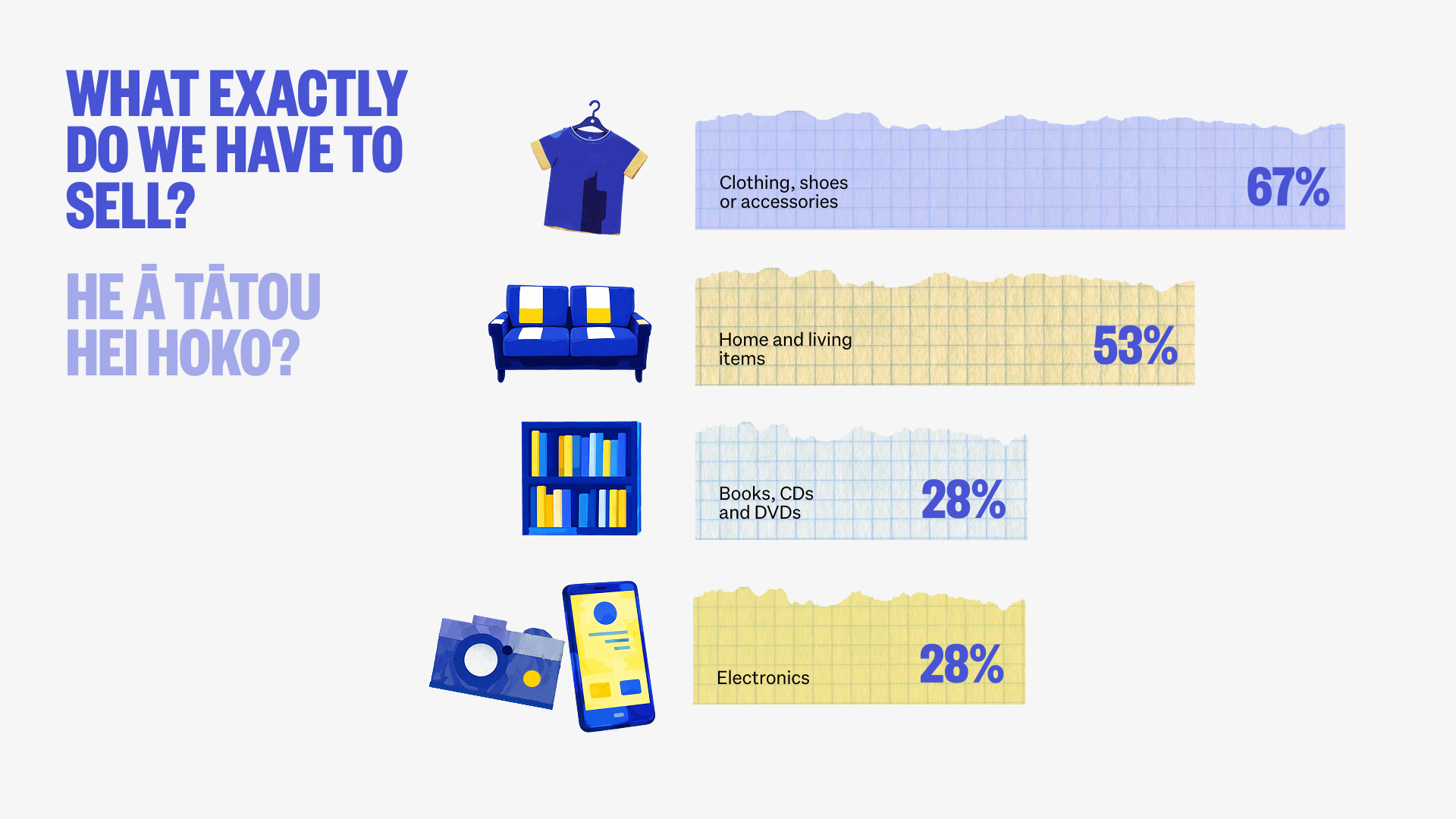
What exactly do we have to sell?
Clothing, shoes, and accessories remain the most common items Kiwi have to offload, followed by home and living goods.
Regional and generational trends
The South Island leads the way in openness to the pre-loved market, with 74% of those in Te Waipounamu considering buying second-hand. Nationally, Tongariro/Taupō leads the country in "hidden" stock, with residents sitting on an average of 36 items per person available to sell.
Younger Kiwi (aged 24-39) are the "power players" of this movement. Over half (51%) of this group sold or attempted to sell items in the last six months, often viewing their unused goods as a way to offset rising costs.
Why it matters
Every action taken, from listing vintage jeans to purchasing upcycled furniture, is a step towards nurturing our environment. Approximately 47% of Kiwi are now more likely to consider upcycling or repairing items than they were a year ago.
By trading pre-loved goods, we collectively help keep perfectly good items out of landfill and protect the future of Aotearoa for generations to come.
You can read our full report below.
Having trouble viewing the report?
Download a PDF version below.
Other articles you might like