Feature article
WOF Ready: What Passes, What Fails, and the Surprising Fails You Didn't See Coming
Learn what’s required for a Warrant of Fitness in NZ.
1 May 2026

The Must-Haves: What Passes a WOF
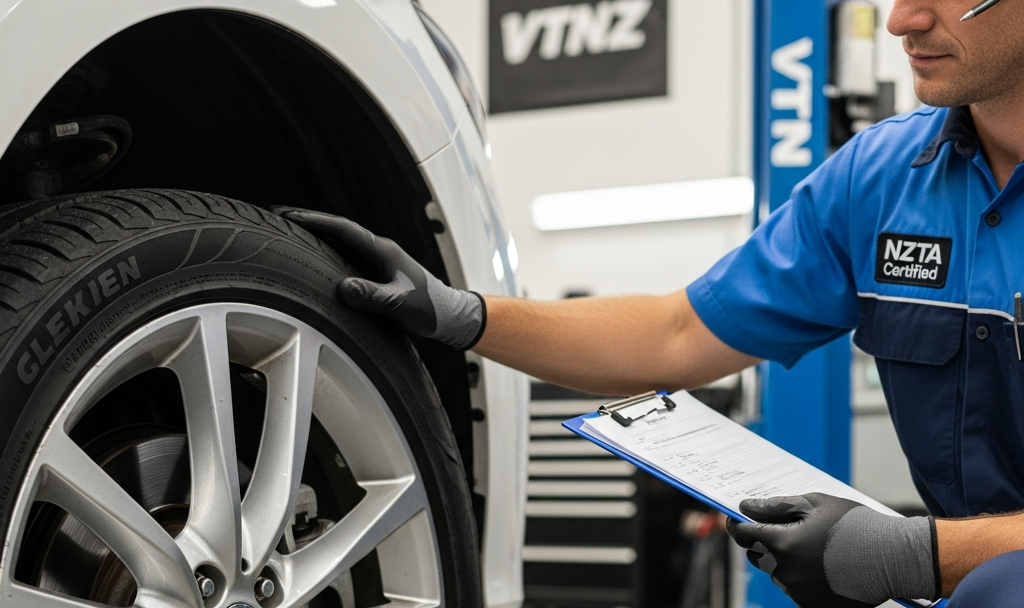
| Tyres | Tyres | Must have a tread depth of at least 1.5mm around the entire tyre. They also need to be free of damage like cracks, bulges, or exposed cords. | Must have a tread depth of at least 1.5mm around the entire tyre. They also need to be free of damage like cracks, bulges, or exposed cords. |
|---|---|---|---|
| Brakes | Brakes | Your footbrake and handbrake must be in good working order, with no leaks in the brake system. This is tested on a brake roller machine, that rotates the wheels and measures braking force. An imbalance of braking force compromises your ability to stop safely. | Your footbrake and handbrake must be in good working order, with no leaks in the brake system. This is tested on a brake roller machine, that rotates the wheels and measures braking force. An imbalance of braking force compromises your ability to stop safely. |
| Lights | Lights | All your lights need to be working – headlights (both high and low beam), brake lights, indicators, and even the number plate light. | All your lights need to be working – headlights (both high and low beam), brake lights, indicators, and even the number plate light. |
| Structure | Structure | The vehicle's body must be free from significant rust, especially in structural areas like around seatbelt mounts. | The vehicle's body must be free from significant rust, especially in structural areas like around seatbelt mounts. |
| Visibility | Visibility | Your windscreen needs to be clean and free of large cracks in the driver's line of sight. Wipers and washers must work effectively. | Your windscreen needs to be clean and free of large cracks in the driver's line of sight. Wipers and washers must work effectively. |
| Safety Belts | Safety Belts | Seatbelts must be in good condition, without any fraying or damage, and the buckles must work correctly. | Seatbelts must be in good condition, without any fraying or damage, and the buckles must work correctly. |
| Steering & Suspension | Steering & Suspension | The steering must be safe and secure, and the suspension systems need to be in good working order. | The steering must be safe and secure, and the suspension systems need to be in good working order. |
| Exhaust | Exhaust | Your exhaust system must be secure, without any leaks, and it can't be excessively noisy or smoky. | Your exhaust system must be secure, without any leaks, and it can't be excessively noisy or smoky. |
The Common Culprits: Why Most Cars Fail
The Surprising Fails: What You Might Not Expect
WOF vs. Servicing: Is a WOF a Guarantee of Safety?
Author
Other articles you might like