Feature article
WOF Ready: What Passes, What Fails, and the Surprising Fails You Didn't See Coming
Learn what’s required for a Warrant of Fitness in NZ.
1 May 2026

The Must-Haves: What Passes a WOF
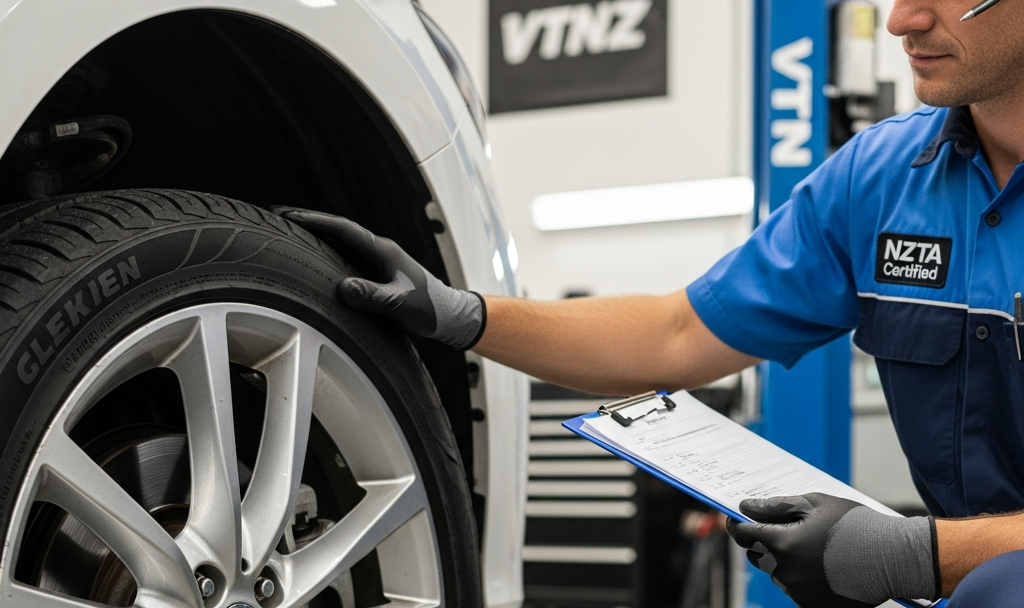
| Tyres | Tyres | Must have a tread depth of at least 1.5mm around the entire tyre. They also need to be free of damage like cracks, bulges, or exposed cords. | Must have a tread depth of at least 1.5mm around the entire tyre. They also need to be free of damage like cracks, bulges, or exposed cords. |
|---|---|---|---|
| Brakes | Brakes | Your footbrake and handbrake must be in good working order, with no leaks in the brake system. This is tested on a brake roller machine, that rotates the wheels and measures braking force. An imbalance of braking force compromises your ability to stop safely. | Your footbrake and handbrake must be in good working order, with no leaks in the brake system. This is tested on a brake roller machine, that rotates the wheels and measures braking force. An imbalance of braking force compromises your ability to stop safely. |
| Lights | Lights | All your lights need to be working – headlights (both high and low beam), brake lights, indicators, and even the number plate light. | All your lights need to be working – headlights (both high and low beam), brake lights, indicators, and even the number plate light. |
| Structure | Structure | The vehicle's body must be free from significant rust, especially in structural areas like around seatbelt mounts. | The vehicle's body must be free from significant rust, especially in structural areas like around seatbelt mounts. |
| Visibility | Visibility | Your windscreen needs to be clean and free of large cracks in the driver's line of sight. Wipers and washers must work effectively. | Your windscreen needs to be clean and free of large cracks in the driver's line of sight. Wipers and washers must work effectively. |
| Safety Belts | Safety Belts | Seatbelts must be in good condition, without any fraying or damage, and the buckles must work correctly. | Seatbelts must be in good condition, without any fraying or damage, and the buckles must work correctly. |
| Steering & Suspension | Steering & Suspension | The steering must be safe and secure, and the suspension systems need to be in good working order. | The steering must be safe and secure, and the suspension systems need to be in good working order. |
| Exhaust | Exhaust | Your exhaust system must be secure, without any leaks, and it can't be excessively noisy or smoky. | Your exhaust system must be secure, without any leaks, and it can't be excessively noisy or smoky. |
The Common Culprits: Why Most Cars Fail
Common culpritts
The Surprising Fails: What You Might Not Expect
These are the ones that often leave car owners scratching their heads.
WOF vs. Servicing: Is a WOF a Guarantee of Safety?
This is a critical point to understand: a WOF is not a guarantee of your vehicle's safety. A Warrant of Fitness confirms that on the day of the inspection, your vehicle met the minimum required safety standards. It does not guarantee that the car will remain safe for the 6 or 12 months until the next check is due but ensures that is of a roadworthy standard at the time of testing.
Parts like tyres and brake pads can wear out or fail at any time. Furthermore, a WOF inspection does not cover the overall mechanical health of your vehicle. Key components like the engine, gearbox, clutch, and cooling system are not part of the check. This is where regular servicing comes in.
A vehicle service is a comprehensive health check that focuses on your car’s reliability and operational condition. It includes changing the oil and filters and inspecting the engine, transmission, and other mechanical parts that a WOF doesn't look at. To keep your car safe and reliable, you need both.
Think of it this way
WOF: A regular, mandatory check of specific safety features.
Servicing: The ongoing maintenance that looks after your car's overall health and longevity.
Author
Other articles you might like