Buying guide

21 kitchen design ideas for your next reno or build

Need a little kitchen inspo?

Ben Tutty
Last updated: 5 December 2025 | 6 min read

Designing a kitchen isn’t easy. You’ll need to make a hundred little choices, and a few big ones, from tiles, layout and colours, to cabinet design, flooring, fixtures, and appliances. 

And the tricky bit is - all these design choices need to fit together to create a cohesive space. 

Usually we recommend hiring an interior designer/architect to help, but if you’re doing it yourself, you’ll need a little inspo. Here are 21 kitchen design ideas to get you started. 

1. Consider why you’re renovating

You should consider what you’re trying to achieve and why you’re building new, or renovating before you make any decisions. If you’re building or renovating your forever home, you may be willing to make riskier design choices that suit your tastes, and perhaps bend the budget a little to get what you want. On the other hand, if you’re renovating for resale it may be best to make design and budget choices that suit the type of buyers who may be interested in your home (and to avoid overcapitalising). This decision should be in the back of your mind throughout the process. 

2. Decide how you’re going to renovate

When it comes to kitchen renovations, you can get rid of everything and start anew, make cosmetic changes - or do some combination of the two. 

  • If your current kitchen needs a serious overhaul, and if a bigger budget makes sense, starting fresh may be the best option. 

  • Or if your kitchen just needs an update, and your budget is small, cosmetic updates may be best. 

For example, if your kitchen layout is fine but everything looks a little dated, you could keep the kitchen cabinetry and repaint or replace the doors, replace the benchtop, and replace fittings. You might want to update appliances if they’re looking dated. 

3. Look around for kitchen inspo

No idea what to do with your reno? You need kitchen inspo! The trick is to look at as many kitchens as you can to figure out what you like and don’t like. You can then either show the good stuff to your designer, or use it to figure out your own design. 

To start, look at Houzz.co.nz, Pinterest.com, Archipro.co.nz, and the projects of interior designers like Atelier Jones, and Spatial Studio

4. Get a little help

Before you start designing anything, it’s worth considering getting a little help in. Chances are, with the help of an experienced interior designer/architect, your kitchen will end up much better. And the good thing is, you can still be involved in the process and make decisions. You’ll just have an expert on-call to answer your questions, and point you in the right direction.

Check out our list of the best interior designers in Auckland.

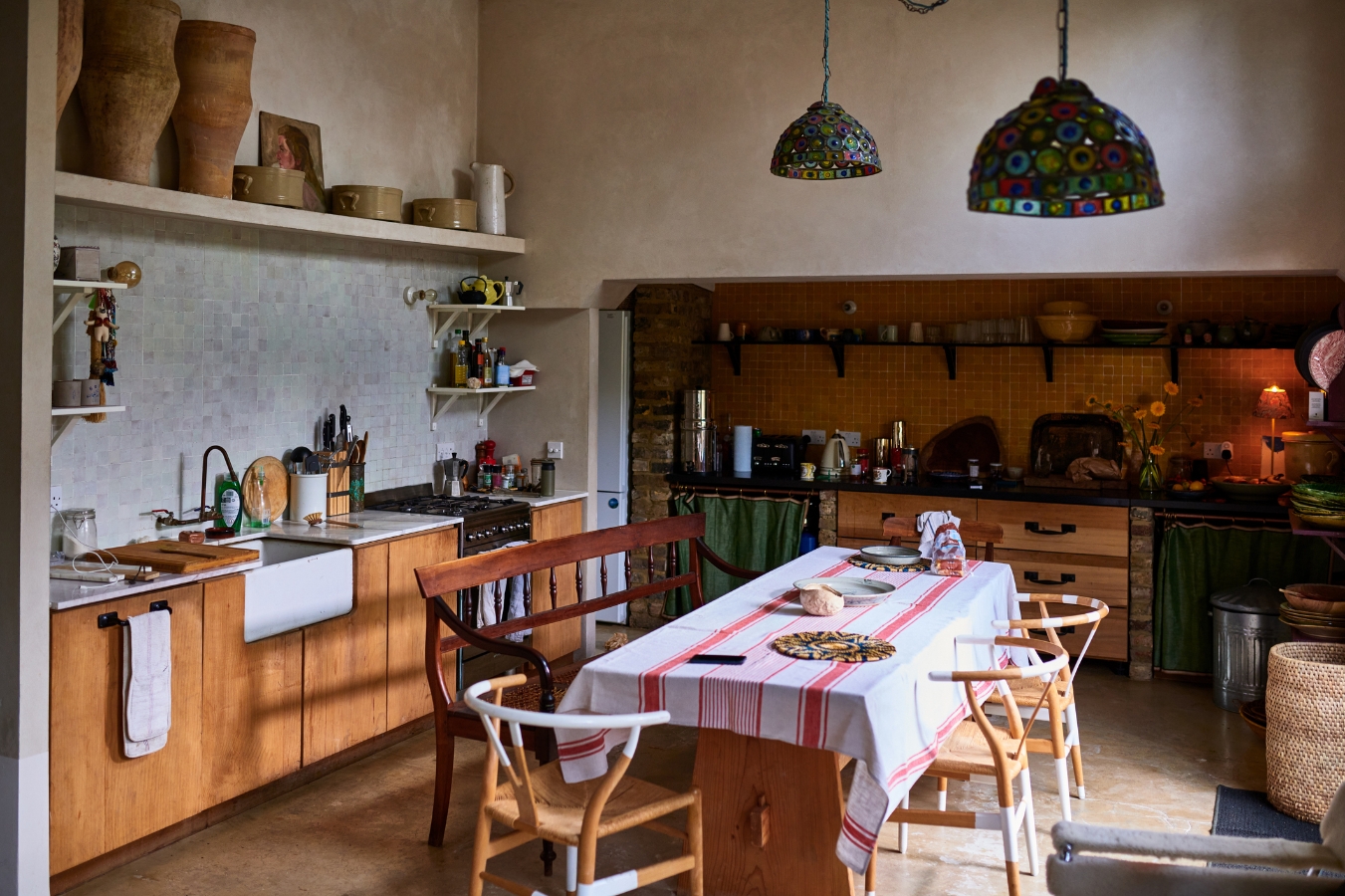
Don't be afraid to add a little colour!

5. Start with your layout - Single wall, galley, peninsular, u-shaped or island

First on your to-do list should be sorting the general layout of your kitchen. This should always be designed to suit the shape of the space, and often a space will dictate what type of layout is possible. For example, narrow, closed off spaces with two walls are usually ideal as galley kitchens (unless you make structural changes). 

During this process it’s a good idea to consider your ‘working triangle’. That is, your fridge, hob and sink. Getting into the space and acting how you may cook and clean if each item were in a given location is a good way to figure out where everything should be. 

Read Kaboodle’s guide to the basics of kitchen layouts

6. Come up with a design theme 

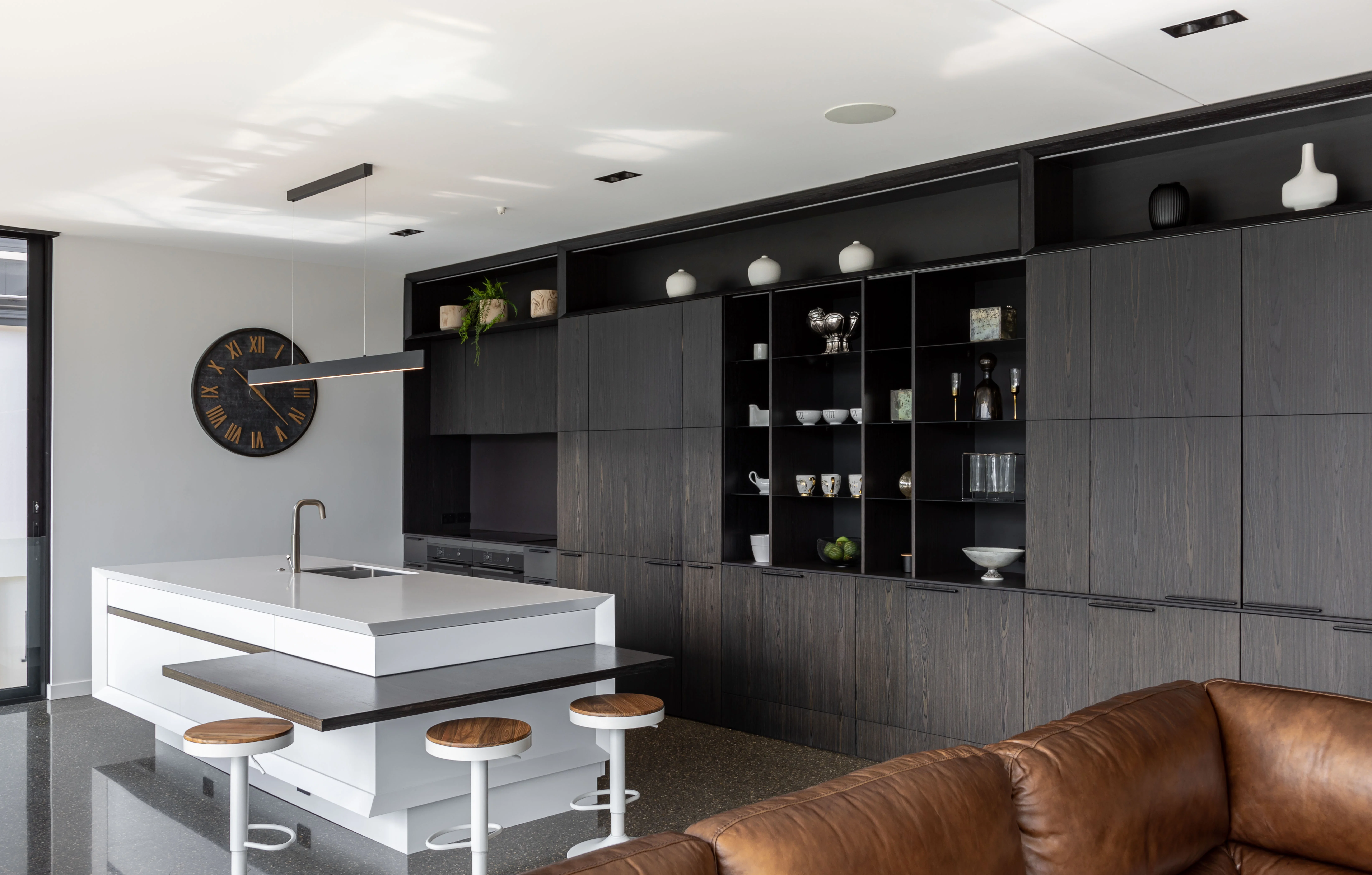
Any good kitchen reno has a cohesive design ‘theme’, so what will yours be? It could be modern, farmhouse, classic, scandi, Japanese inspired, industrial, coastal, rustic, or a mix of several of these. The most important thing here is that the theme matches the rest of your home, so that your kitchen feels like it fits in the space. 

7. Match colours across tiles, flooring, benchtops, and fixture materials

When coming up with your theme, consider each element separately, then together. Get samples of tiles, benchtops, colours, and fitting materials, and place them together to make sure everything looks good as a whole. This is sometimes called a ‘mood board’. 

Putting together a mood board is the best way to make sure that all your individual elements will add up to a good looking kitchen. 

8. Consider texture as well as colour

Your kitchen should have texture, as well as colour. Think mosaic tiles with colour matched grout, kitchen cabinetry with swirling timber grain, exposed brick, veined marble or stone, and textured glass. Anything that’s not a flat lifeless surface (like vinyl, glass, or stainless steel) will add visual interest to your space and help bring it to life. 

9. Use as much natural material as possible

The problem with many new kitchen renovations is that they lack character, choosing the most readily available or cheap materials. These kitchens all tend to look the same. To make your kitchen unique, and full of character, use natural materials wherever possible, whether it’s timber, stone, or marble. 

10. Plan appliances before cabinetry

If you’re replacing appliances make a choice before designing the cabinetry and share the models you’re buying with your cabinet maker in advance. 

11. Keep aisles 1.1m wide 

Unless your space is tiny, or will only ever be occupied by one person, it’s a good idea to aim for an aisle that’s at least 1.1m wide. Anything narrower makes stepping around people, or maneuvering when drawers are open tricky. 

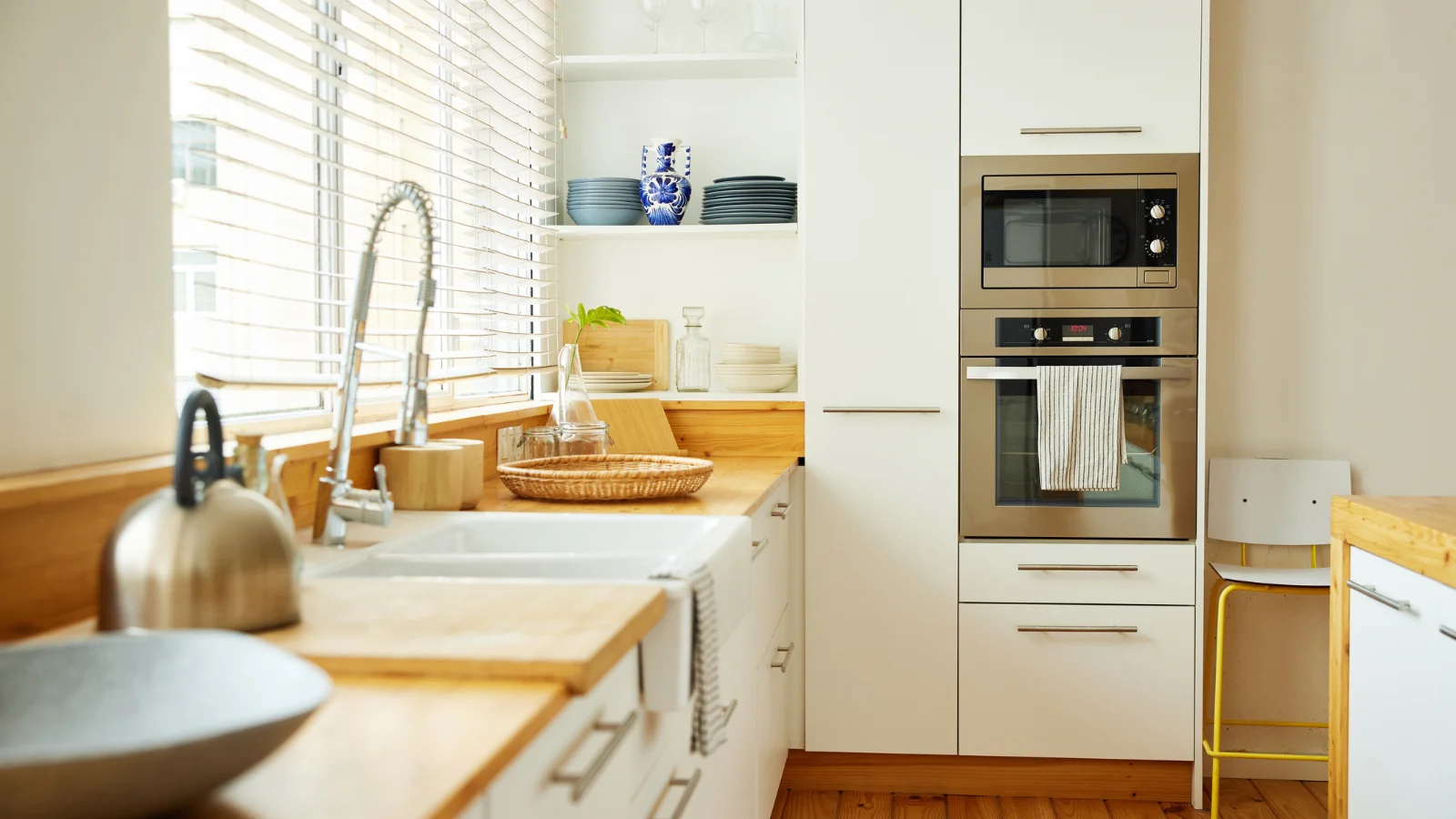
Good kitchen design should make cooking, cleaning (and life) a little easier.

12. Maximise storage (and think twice about open shelving)

When renovating a kitchen, storage is key. Fit as much as you can into the space without making it look cluttered, whether that’s floor to ceiling drawers, and cabinets, or shelving around your fridge, or big cupboards up high for bulky, rarely used appliances (like crock pots in summer). Having too much storage isn’t a bad thing - your stuff will look clean and tidy, like Marie Kondo’s just visited. 

13. Go for drawers, not cabinets

Old kitchens used to have cabinets throughout. If anything finds itself at the back of a cabinet like these, it is often forgotten for weeks, or months at a time, unless you get down on your haunches and rummage around. Drawers are a much better solution. When you pull them out, you can see everything they contain from the top down, making them easier to organise and use. 

14. Prioritise lighting on workspaces

Lighting is often forgotten in kitchen renos, but it’s a key part of the equation. Downlighting is the most popular choice these days as it’s inexpensive and does the job well (but it does tend to lack character). Start with downlighting over key work areas, like your sink, your hob, and prep space, then build from there. Some downlights may be replaced by feature lights, and dimming could be added to soften the space for social evenings around the kitchen island, for example. LED strip lighting is also often used to highlight key features, like timber accents, and open shelving. 

15. Open the space up

As a general rule, open, flowing spaces are better than closed spaces. So if you can during your kitchen renovation, do whatever you can to make your space feel more open. This might include removing a wall, to open your kitchen into your lounge, or lowering a breakfast bar to benchtop height.

16. Maximise natural light

One of the best ways to make your kitchen a nice space to be in is to flood it with natural light. To do this you could add in a window, or skylight, or remove a wall to let light flow in from another room. Take it from me - in my recent renovation the best thing I did was installing two skylights over my kitchen (which were surprisingly inexpensive). 

17. Leave your kitchen island empty

There’s a recent trend toward leaving a kitchen island completely empty - no sink, no cooktop. This turns the space into a second dining table, and massive oversized prep space, which makes entertaining and cooking for large quantities of people much easier (plus it looks cool and minimalist).  

What's for dinner?

18. Bring nature in

It can be difficult to introduce character into a new kitchen, especially if your budget is limited. Designing a place for a plant or two to live can be a great way to bring colour and life into the space without spending much at all. 

19. Kick bins

In my renovated kitchen I’ve got a drawer that opens with the press of a toe, and out comes four bins for separating glass, rubbish, and cardboard. It cost next to nothing but it’s my favourite thing in my entire kitchen.

20. Built in appliances

It can be tough to find appliances that fit the vibe of your kitchen renovation, especially if you don’t have a big budget. Building appliances into your kitchen (especially your dishwasher) is a good way to solve that problem - it costs a bit more, but it looks far better and can make the space easier to clean. 

21. Think about a lifetime of use when choosing materials

What’s your kitchen going to look like in 5, 10, or even 20 years? Small tiles require lots of cleaning so that the grout doesn’t discolor. Stainless steel will scratch over time. Marble may discolor and stain, while vinyl and other budget materials don't handle heat well. Timber can also warp and stain if it’s exposed to too much heat, or sitting moisture. No material is invincible - whatever you choose will degrade and change over time. The trick is, choosing stuff that’s easy to clean, easy to maintain, and looks better as it ages (and then accepting that nothing will be perfect forever). 


Read to start planning your reno? Get started on your budget, with our guide to kitchen renovation costs in NZ


Author

Ben Tutty
Ben Tutty

Ben Tutty is a regular contributor for Trade Me and he's also contributed to Stuff and the Informed Investor. He's got 10+ years experience as both a journalist and website copywriter, specialising in real estate, finance and tourism. Ben lives in Wānaka with his partner and his best mate (Finnegan the whippet).