Feature article
Island living in the Hauraki Gulf
If self-sustainability, quality of life and community are key, the island lifestyle might be for you.
AI summary
Consider island living in the Hauraki Gulf for a unique first home. With flexible work and correcting prices, islands like Waiheke, Kawau, and Aotea Great Barrier offer a lifestyle focused on community and self-sustainability.
Waiheke provides a vibrant community with entry-level homes near $1M. Kawau Island is a more affordable option with a tight-knit community, while Aotea Great Barrier offers a true off-grid experience for committed buyers seeking a simpler life.
If you can’t get excited about buying in an Auckland suburb for your first home but want to make the most of what the city has to offer, why not think of buying an entry level home on a Hauraki Gulf island like Waiheke, Kawau or Aotea Great Barrier Island?
There’s a lot to love about island life – catching fish fresh for dinner, a community where people really look after each other, less time spent inside, more time getting out and about enjoying the natural beauty of your surroundings, it’s got to be tempting.
And your timing could be good. As property prices correct and the retirees leave the island to be closer to medical facilities and family as they age, there are a number of affordable homes on these islands coming up, former holiday houses where you can add value. And chances are, your employer is more relaxed about how many days you’re physically in at the office, so your commute is going to be much more doable.
The Waiheke Island lifestyle
Waiheke Island veteran, Barfoot & Thompson agent, Howard Gee, explains some of the advantages about living on the island.
“What you get if you buy your first house on Waiheke is freedom, open spaces and amazing fresh air,” he says. “Waiheke probably gets 20% less summer rainfall than Auckland and it’s three or four degrees warmer.” As a consequence, olives and grapes grow well on the island as well as your garden vegetables.
“It’s just the lifestyle,” he continues. “You go to the beach every day, there are beautiful walks, and there’s a real sense of community,” he adds. He remembers word going out that a resident’s house had flooded up the road and he and his neighbours – eight of them, just arrived at the home to help clean up, without any formal call out for help.
Kellands agent, Cathy Carter, who has built her home on Waiheke, remembers bringing some home furnishings over on the ferry. She got on the bus with a 4 metre curtain pole and the driver put it down the length of the bus, asking all the passengers to stand up so he could make it work. He then dropped her off just outside her house rather than at the bus stop. She always waves to the bus drivers when she sees them, she says.
“It’s a lovely community, that’s what we’ve found and you can embrace that or not,” says the former Cantabrian. The island has a broad demographic, adds Cathy, who has her son and young family staying at the moment and they’re loving the experience, she says.
The Kellands agent, who lives in Oneroa, the first village you come to from the ferry, was admiring the view from the village out to sea the other day and a woman stopped to look too. They smiled at each other and agreed it was beautiful. “She said to me, “If I go to Auckland and smile at people, they look at me as if I’m mad,” retells the Kellands agent.
Where first home buyers should start their search on Waiheke
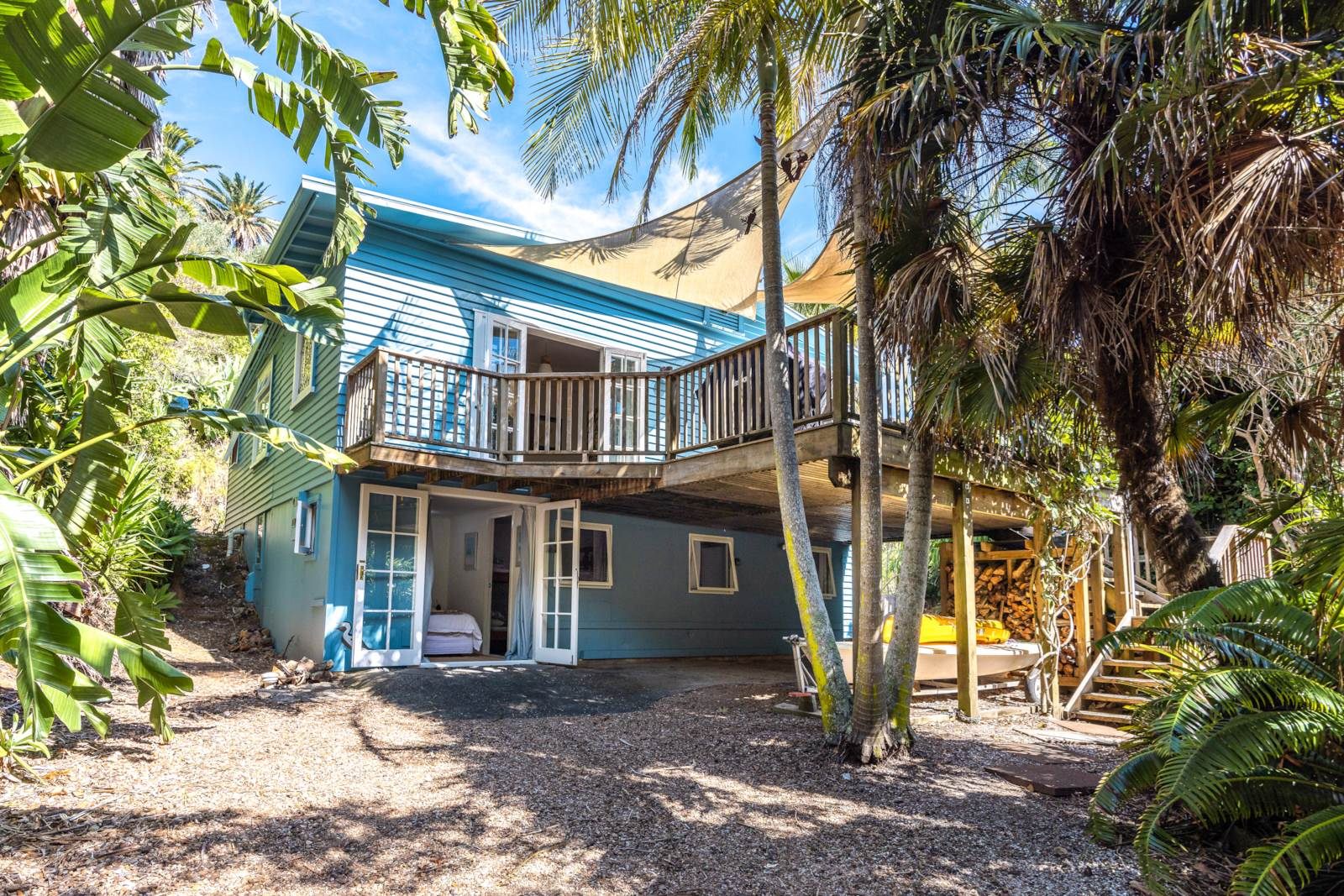
So where should first home buyers look on Waiheke for something they can afford and add value to?
“When we were looking to buy, people said you must buy on the northern side,” says Cathy. But you’re paying a premium because it’s got the vast sea views, and there’s a lot on the island that's just as beautiful, says the Kellands agent.
To first home buyers, she would suggest looking at Surfdale, Omiha (also known as Rocky Bay), Ostend, and the Blackpool side of Oneroa. Also if you’re happy to do without a sea view, you’ll buy well in Onetangi, known for its stunning beach, says the agent.
Barfoot’s Howard Gee is marketing a picture perfect home in Omiha in the $1.3 million price range and lives next door to the house.
3 McMillan Road, Omiha, Waiheke Island
Omiha/Rocky Bay has its own character, he says. More people live there than rent which adds to the feeling of community. The Omiha Memorial Hall has regular events which bring locals together.
“Omiha/Rocky Bay has a lot of bush, it’s the Titirangi of Waiheke,” says Howard. It’s got a very good bus service, you can have a boat mooring and there are two beaches and a park.
And there’s good fishing to be had from the bay. Howard recently caught a large snapper and a kahawai.
“Waiheke has definitely changed over the last 30 years but that’s progress,” says the Barfoot’s agent. You can run into people on the island like Lenny Henry’s daughter, and Amanda Palmer, the American musician, who seems to have become attached to the place.
“It’s pretty multicultural,” says Howard, who notes Waiheke has a famously good soccer team thanks to having several Argentinians playing on it. The island’s wineries, meanwhile, have French and Italians working there, so there’s a great mixture of people, he says.
What is entry-level on Waiheke?
When agents talk about entry-level prices on Waiheke they’re talking close to $1 million but there are some properties selling beneath that in the current softened market.
There are former baches coming to the market which would make good homes, says Howard. And sections in Omiha/Rocky Bay are usually around $450,000.
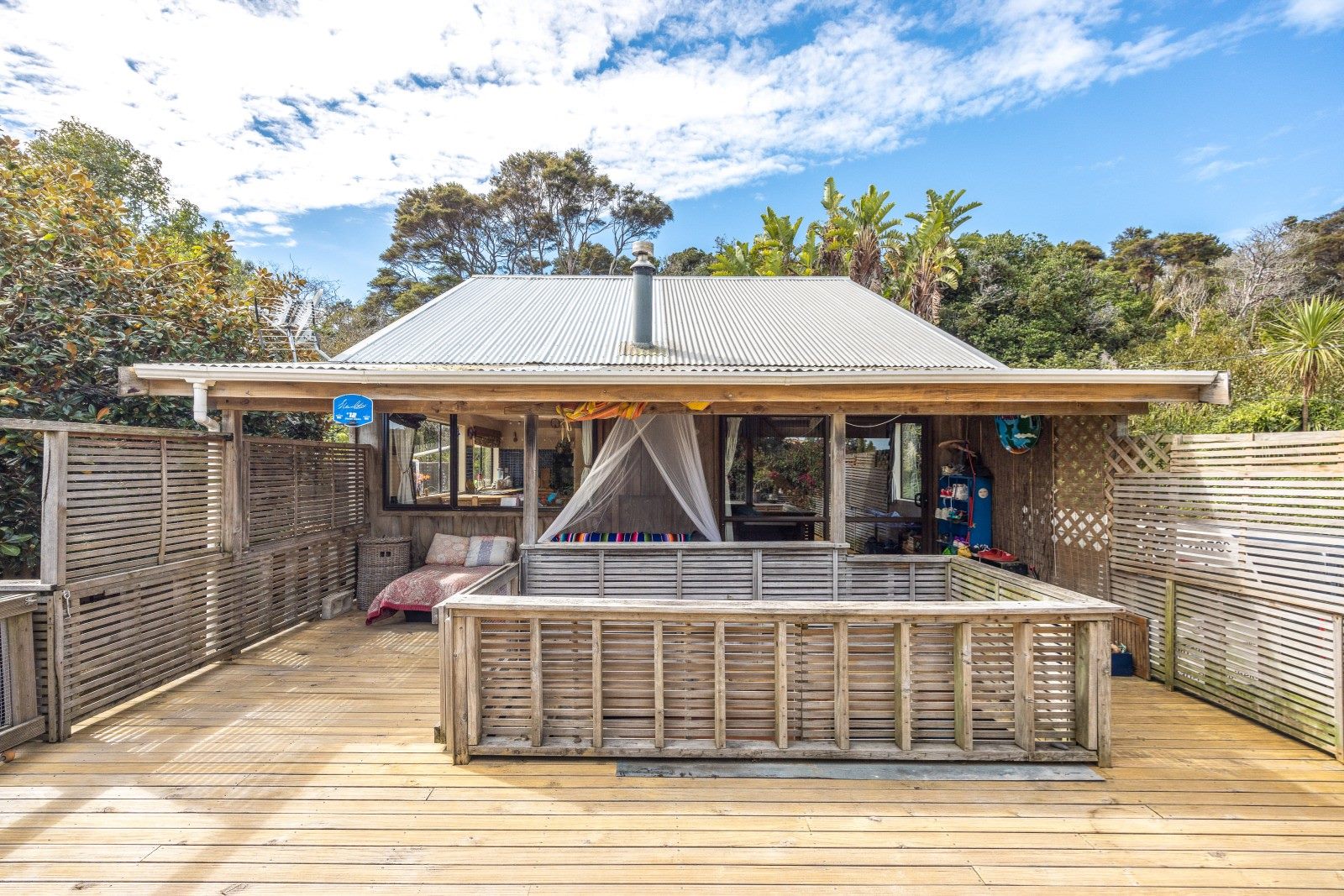
The good thing about island homes is they often have extra living space which can be rented out to add to your income if required. A Kellands’ listing on the market, a three bedroom Ostend home, asking $1.195 million, has a cabin with a deck and loft at the rear of the property, which could accommodate extra guests, suggests Cathy. A studio at the front of the property could be a good work from home option.
51 Whakarite Road, Ostend, Waiheke Island
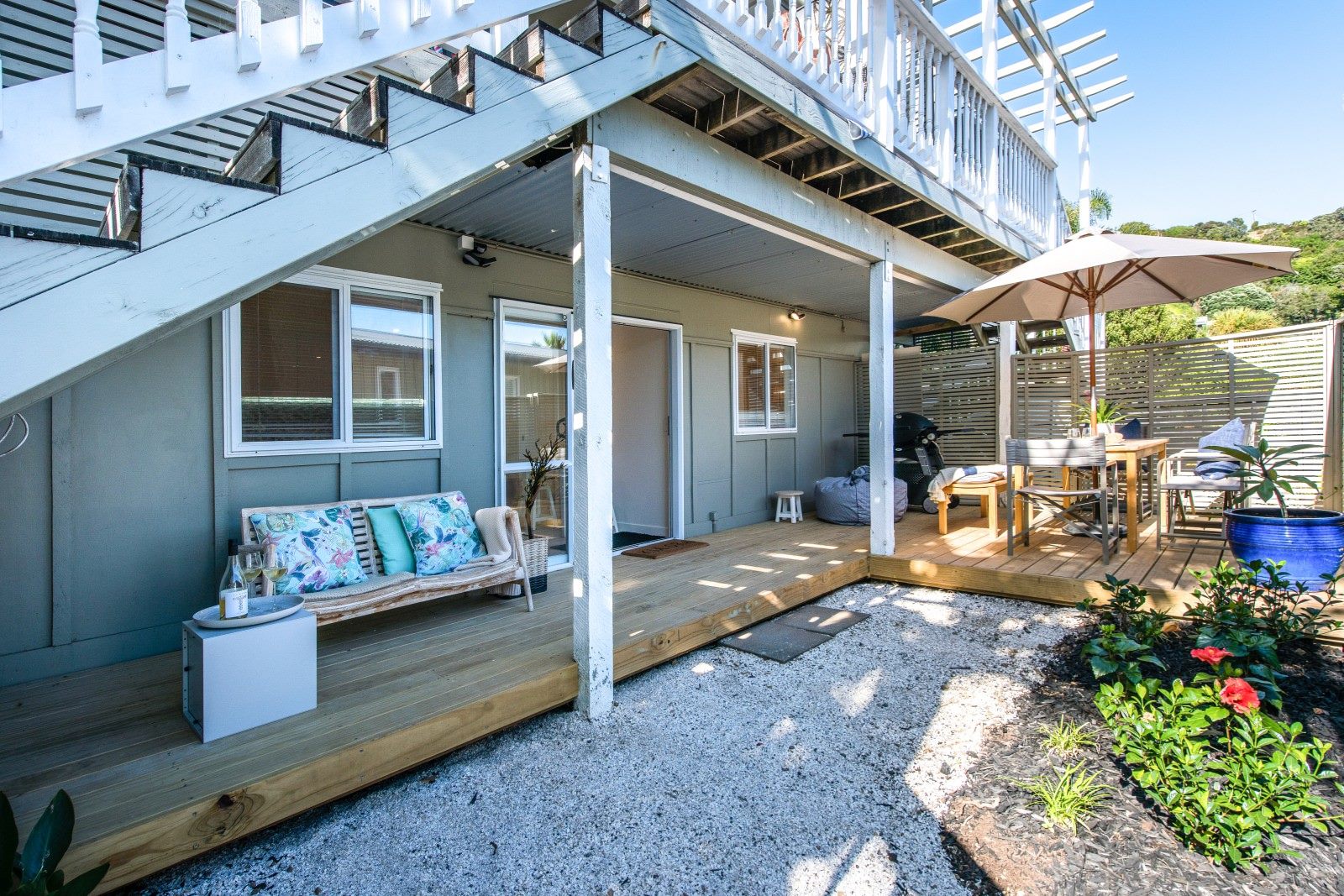
Ostend, which is where the island’s main supermarket is, is handy for the local school and if you’re commuting from Kennedy Point to Half Moon Bay, says the Kellands agent. Some island-based children travel to St Kentigern’s from there, she adds.
Cathy is also marketing a very attractive one bedroom, one bathroom apartment in a tightly held eight apartment complex in the popular northside suburb of Palm Beach, priced at $995,000. This would be a good place to start your journey on Waiheke, she suggests.
54d Palm Road, Palm Beach, Waiheke Island
Affordable Kawau Island
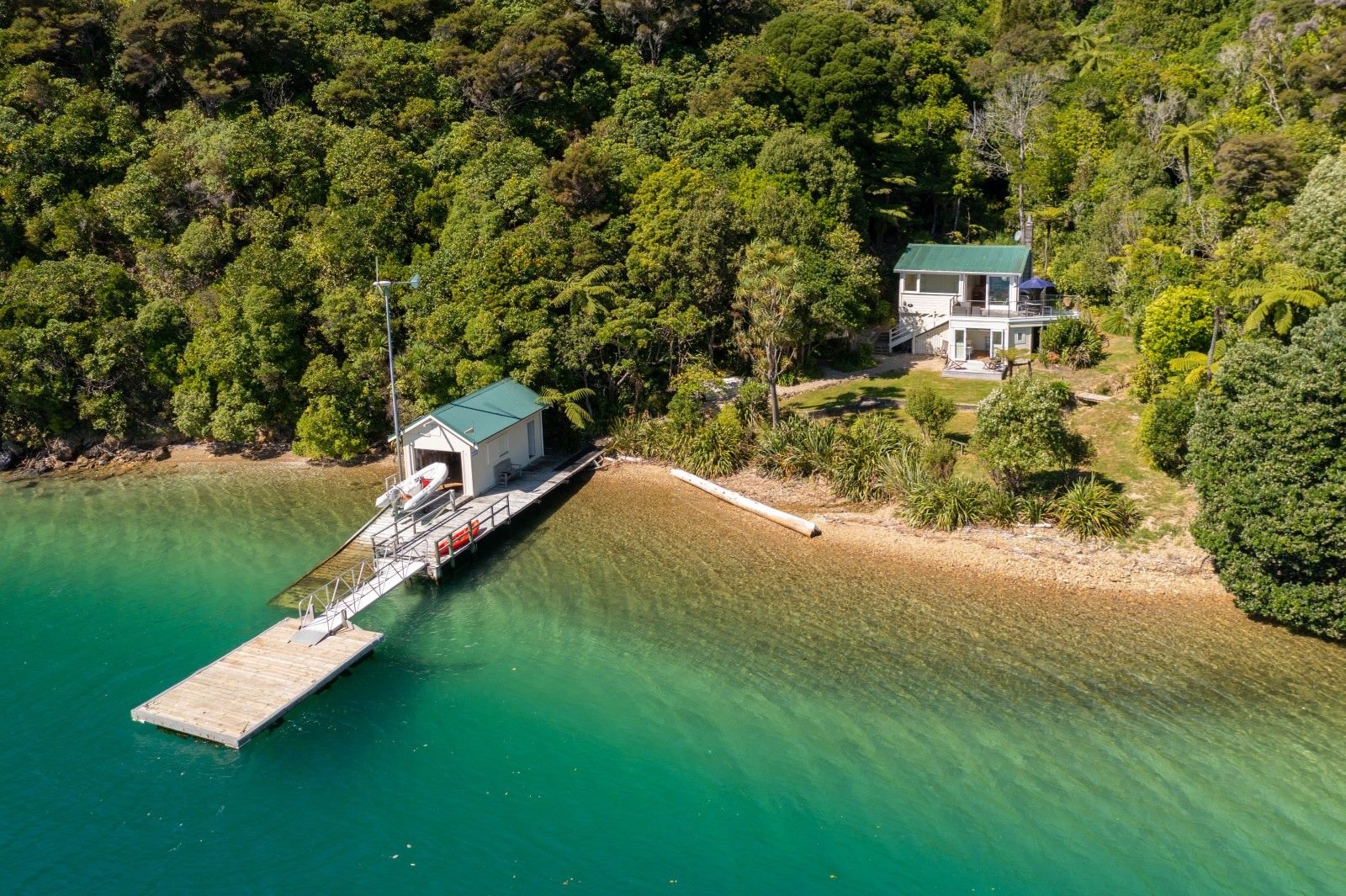
One of the most affordable islands for first home buyers in the Hauraki Gulf is Kawau Island, a ferry or water taxi ride away from Sandspit.
There’s a bit of a changing of the guard going on on the island at the moment, with older residents moving away, says agent Debbie Aldred. And this is giving some opportunities to new people to come to the island.
“I’ve just put a family in a house with three children.The kids are commuting to and from school at Snells Beach,” she says. A water taxi takes around 10 to 12 kids to school every morning, a half hour trip, she adds.
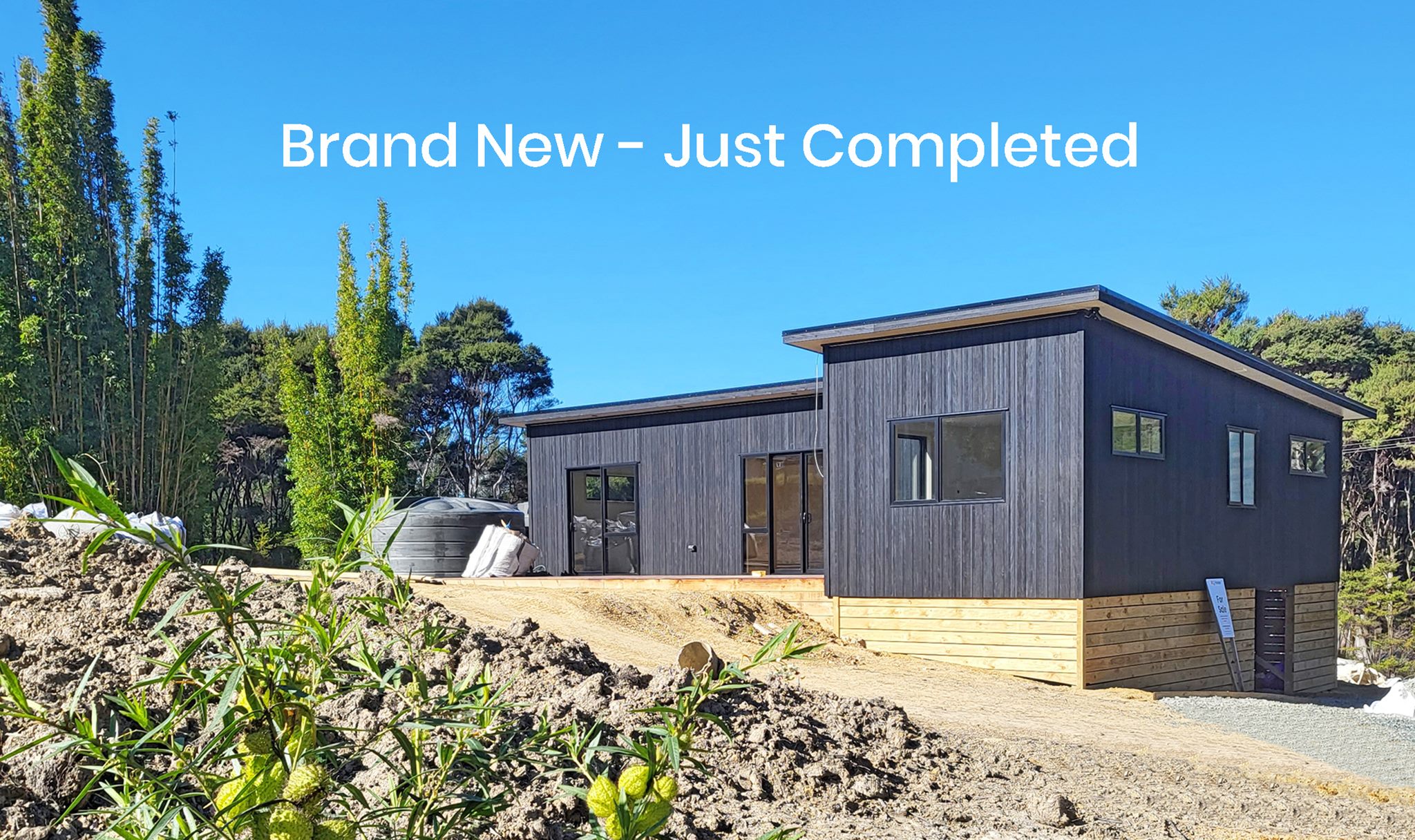
Kawau has some good deals on entry level homes at the moment. A newly completed three bedroom, two bathroom house is for sale at 50 Schoolhouse Bay Road for $850,000. It’s a good opportunity for a buyer not wanting to go through the inconvenience of building themselves. Being sold through LJ Hooker Warkworth’s Robert Hood, it has direct road access to the waterfront and boat ramp and it’s just a five minute walk to the public wharf and ferry.
50 Schoolhouse Bay Road, Kawau Island
Debbie, who meets buyers over on the island most Fridays, has a listing at 46 Schoolhouse Bay Road, a Lockwood-style home, priced at $650,000, a great buy, she says.
The home comes with a SUV car which is something non-islanders might find a quirky part of the deal. Kawau has two roads – Schoolhouse Bay Road and South Cove’s Hall Head Road.
Debbie says a do-up on Kawau will sell for around $550,000. Properties that are well suited for tiny homes go for under $450,000 and they get snapped up pretty fast, she adds.
Flatpacks for tiny homes are dropped by helicopter onto the island, and in fact, most construction is done by helicopter, says Debbie.
Homes on Kawau are hooked up to mains for electricity but a lot of younger people are looking at going off grid by choice, notes Debbie .
Newcomers to the island will enjoy the community feel. “When you live on an island, everyone pools resources,” says Debbie. If one goes to do a chore, a tribe of people go.
A lot of people have boats on Kawau, however big or small. Debbie said she recently saw a boat with three different home owners in it, the boat bursting with groceries, Plant Barn shopping, and there was just enough room for the dog at the back.
You can get groceries delivered to the island too, she says. What people who work in Auckland do, says Debbie, is they commute to Auckland one day a week on a quiet day like a Tuesday or Wednesday, and get groceries on the way home, says the independent agent.
As for the Kawau Island residents (permanent population 80) they’re a wide ranging bunch from architects, IT people, mortgage brokers, book editors and lots of writers and artists. If anyone is anxious about fibre or wifi at Kawau, Elon Musk’s Starlink dishes mean you can get fabulous wifi any time, says the agent.
You can be very self-sustainable on Kawau, she says. Most people have veggie gardens, some have hens and people are looking after the land which takes a bit of time. For some, it’s about maintaining the wildlife, among other things. And there are book clubs, there’s a lot going on, as you’ll read in the island’s Kookaburra newsletter, says Debbie.
The amazing Great Barrier Island lifestyle
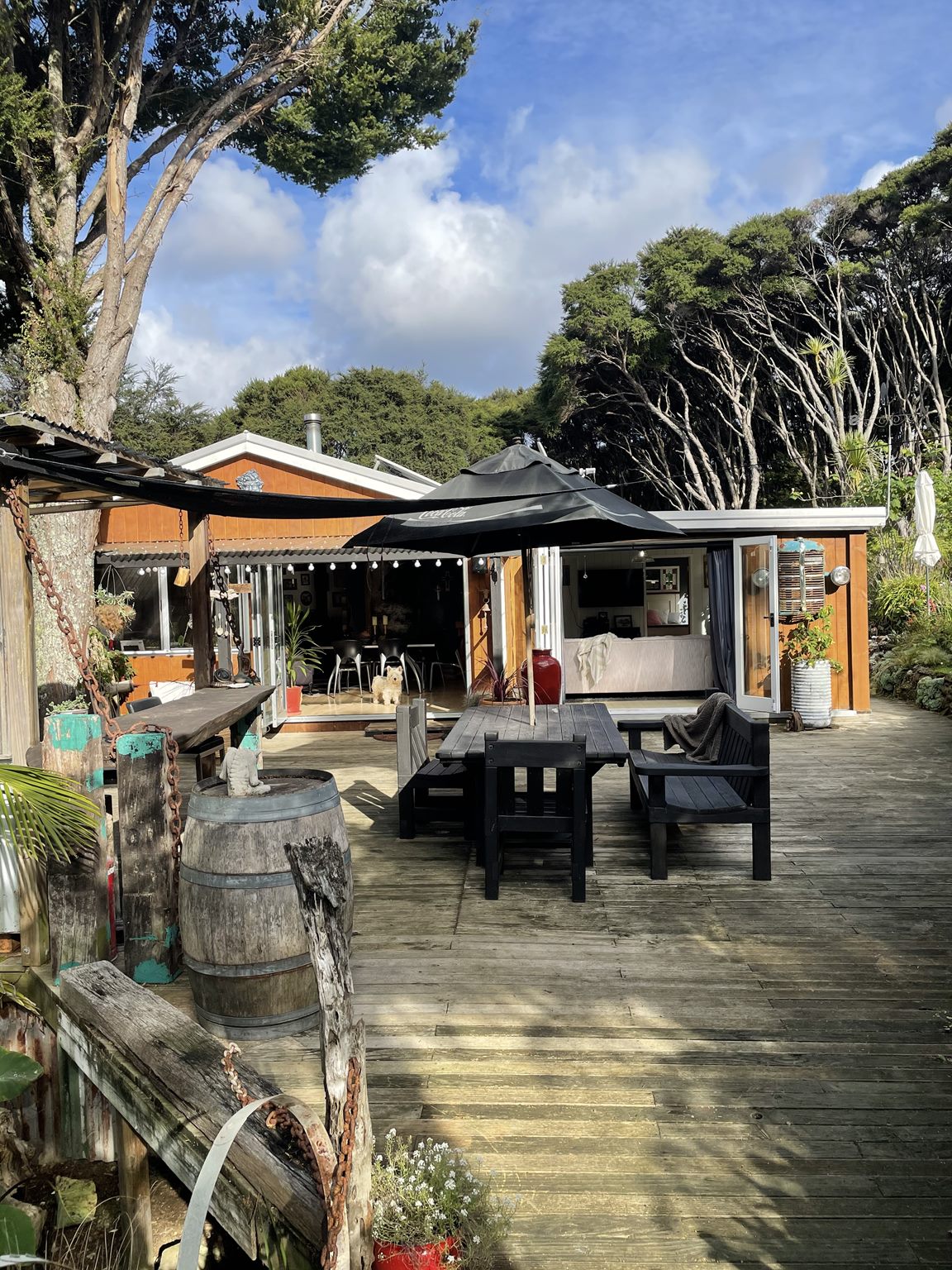
Anyone who has visited Aotea Great Barrier Island, 90 km east of Auckland, will know it’s a very special place, and three times as big as Waiheke Island, at 285 sq km. Having said that, it's not nearly as populated as Waiheke, with 70% of the island Department of Conservation land.
And if your dream is to buy on the island, it’s highly likely you’ve holidayed there. Bayleys agent, Neill Clarke, who lives on Aotea Great Barrier, says: “People fall in love with a place like this, but you have to be committed.”
“I’ve not had any buyers who’ve purchased who haven’t at least spent some time here before,” he adds. The initiated will know that there’s no electricity supply, no banking facilities, no supermarkets, footpaths, streetlights or public transport. The residents are pros at living off grid, harnessing power from the sun and wind.
Neill’s part of the island, the northern boating haven of Port Fitzroy, is a favourite spot for boaties to pick up fuel, water and supplies in the Gulf.
“It’s great for fishing and feels like Marlborough Sound,” he says. “It’s very isolated but accessible,” explains the South African-born agent. There’s good roading on the island and the airport is excellent, he notes. The direct flight to Auckland is an hour, compared with the four and a half hour ferry.
“A lot of people are coming here instead of taking the four hour drive to Coromandel,” says a local agent. Great Barrier is just over 24 km from Coromandel Peninsula.
The Aotea Great Barrier community, 900 permanent residents (compared with 8900 on Waiheke) on the island is very strong. “Everyone knows everyone,” says Neil, but at the same time if you need your space and privacy, you’re left alone.”
391 Aotea Road, Great Barrier Island
A number of properties on the island change hands privately between locals, land has been gifted to clients over generations, says Neill. And a lot of people new to the place might buy land first and then build.
To build a simple house from scratch on Aotea would cost $700,000 minimum, says one agent. For a simple house that needs work, meanwhile, you’ll typically pay between $500,000 and $700,000, he says.
Neill is marketing an attractive entry level home in Tryphena, a beach settlement on the island’s southern coast, and the island’s main township with shops and public facilities. On the main road of Blackwell Drive, the small house with one bedroom and one bathroom plus a sleepout, has views to Pa beach. Priced at $835,000 it’s an excellent opportunity for a first home buyer, says Neill. With good water, solar power and a wastewater system, this could be your chance to try off grid living, he suggests.
“Talk about location, location location,” says the Bayleys agent.There are amazing views and there’s heaps of potential to add value by upgrading the kitchen and putting in a new bathroom, he adds.
Blackmore Drive is a very popular road for families, adds the agent. Everyone knows everyone, the kids can walk down to the beach which is 100 to 200 metres away. They’re very safe beaches and the sea is the cleanest, most crystal clear water with dolphins and orca coming into the bay, he says.
Another upside of island living for first home buyers
One of the upsides to island living is you tend to live a simpler, less consumerist life. Islands like Waiheke and Aotea Great Barrier have shops but there’s no shopping centres to go crazy at.
“You can save a lot of money living on Kawau if you’re a first home buyer,” says Debbie Aldred.
“Not everyone can live there. For some who want to know how long it’ll take to walk to a local cafe, they’re out of luck,” says Debbie. “Kawau isn't for you.”
On Waiheke, Cathy says you can have a veggie garden and the citrus is amazing.
“It’s the lifestyle. It just depends if you’re a city person or you want somewhere more laidback with no traffic lights,” she says.
People have a way of getting “islandised,” on Waiheke, says Barfoot’s Howard Gee. One neighbour who was returning to her main house in Auckland on the ferry, was flummoxed when she got to the terminal and discovered she didn’t have any shoes on.
Another plus is, you’ll never have any trouble renting your island home out while you travel elsewhere because there’s always someone who wants a getaway place at an island.
Discover More

How a $23 million Lotto jackpot influences Kiwi search behavior on Trade Me Property
Trade Me data reveals Kiwi engage in luxury window-shopping when Lotto jackpots

Stunning photos show Otago's best new architecture
Otago’s top new architecture projects include heritage restorations, rammed earth homes and striking modern retreats.
Search
Other articles you might like