Feature article
New Zealand housing crisis: what’s really going on?
We delve into why our long-running property challenges continue to hold tight.
12 December 2025

New Zealand's housing market has recently offered a glimmer of hope: house prices and rents have softened from their dizzying 2021/2022 peaks. However, beneath this surface-level stabilisation, the foundational issues that created the nation's housing crisis remain deeply entrenched. This decades-old challenge, characterised by crippling unaffordability, chronic undersupply, and devastating human costs for vulnerable families, is far from over.
This article goes beyond the latest quarterly reports to explore what’s truly going on: examining the historic causes of the supply shortage, highlighting who is bearing the highest burden, and breaking down the complex policy efforts aimed at building a more equitable future.
What we’ll cover:
- A quick snapshot of the housing crisis
- What caused the crisis?
- Who is most affected by the housing crisis?
- What the Government is doing
- Is the housing crisis improving?
- What might help solve the crisis long-term?
- What this means for buyers, renters, and families right now
A quick snapshot of the housing crisis
Despite house prices softening from their 2021/2022 peak, the fundamentals of New Zealand’s housing crisis haven’t shifted dramatically.
- According to the latest Trade Me Property Pulse Report, the national average asking price was $883,200 in October 2025, down from the $970,000 peak in early 2022.
- Rents have softened too. Trade Me’s October 2025 Rental Price Index shows the national median weekly rent has fallen to $610, the lowest level since May 2023.
- Demand for social housing remains high. As at 30 September 2025, there were 19,431 applicants on the Housing Register (each applicant typically represents a household), down from around 26,868 applicants in March 2022*.
- Te Waihanga’s research shows that over the last 20 years, New Zealand has experienced faster growth in house prices than any other OECD country, and that all large and mid-sized cities now have median house prices well over five times median household income.
While these indicators suggest things are moving in the right direction, experts warn progress will be slow. There’s debate over whether the term “crisis” still applies, but recent coverage notes that bank economists and housing advocates generally agree the situation is far from over. In short: the trend is improving, but it’s not something that will be fixed overnight.
*While the decrease in emergency housing numbers may appear to signal improvement, it is important to exercise caution when interpreting these figures. The new government policy, 'Tightening the gateway into emergency housing,' which came into effect in August 2024, has made it more difficult for people to access temporary accommodation. As the Ministry of Social Development analysis suggests, this policy shift can lead to a rise in rough sleeping and hidden homelessness, so the numbers alone do not tell the full story of housing need in New Zealand.
What caused the crisis?
A long term slide in housing supply responsiveness
At a very high level, New Zealand used to be good at keeping up with housing demand but since the 1970s, supply has progressively failed to respond to growth.
Key points from Te Waihanga’s research:
- Between 1940 and 1975, we built enough housing to keep prices relatively stable.
- From the 1970s onwards, more restrictive planning rules, land-use limits and infrastructure bottlenecks sharply reduced the land available for new homes.
- As travel times worsened and cities became more congested, urban expansion slowed, further limiting supply.
- Because housing supply couldn’t keep up with demand, house prices began rising much faster than incomes, faster than almost anywhere else in the OECD.
In other words: demand rose, supply couldn’t keep up, and Kiwi have been paying the price ever since.
Affordability pressures
The numbers tell the story. With an average asking price of $883,200 in October, a typical 20% deposit comes to around $177,000.
Meanwhile, the median weekly earnings from wages and salaries in the June 2025 quarter were $1,380 before tax. And with the national median rent sitting at $610 per week, plus everyday costs like food, transport, and insurance, there isn’t much room left to save.
It’s easy to see why reaching that $177,000 deposit feels out of reach for many. Government support can help, but the path to home ownership remains a significant challenge for many households.
Rents and rental shortages
While rent prices have levelled off recently, the decade prior saw steep and consistent increases, making it hard for many renters to keep up.
Demand for rentals has been high in recent years, although Trade Me data now shows easing pressure: listings are up and nationwide rental search activity is down compared to a year ago, which is helping to soften rents in some regions.
Who is most affected by the housing crisis?
Children and vulnerable families
The human cost is stark. Child Poverty Related Indicators reveal:
- Around 7% of children live in homes with major dampness and mould issues.
- It’s estimated more than 30,000 children are hospitalised each year from preventable, housing-related illnesses such as asthma, pneumonia and bronchiolitis.
Crowding, cold homes, and poor housing quality aren’t abstract issues, they’re shaping the health outcomes of an entire generation.
A safe, dry home shouldn't be a luxury for our youngest Kiwi. Unfortunately, poor-quality housing is still shaping the health outcomes of thousands of New Zealand children every year.
Māori & Pacific whānau
According to Stats NZ’s Housing in Aotearoa New Zealand 2025 report, Māori and Pacific peoples in particular “experience poorer housing outcomes, and higher rates of crowding and homelessness” than the general population.
These inequities are longstanding and systemic, and show up across measures like overcrowding, unaffordable housing costs, and housing quality.
Renters
Renters face:
- Higher weekly costs relative to income than many owners.
- Competition for limited stock in some regions, especially near jobs and transport.
- Higher rates of poor-quality housing, particularly cold, damp and poorly insulated homes.
Roughly 600,000 households, about one-third of all households, are renting and many of the homes built before 1978 have inadequate insulation, although this should be improving with the roll-out of the Healthy Homes Standards and related regulations.
First home buyers
Despite more homes coming up for sale and prices hikes slowing, affordability remains the key barrier:
- Even with KiwiSaver withdrawals, and other Government assistance, most buyers struggle to get a deposit together.
- Recent bank disclosures and industry reporting suggest most lenders are still testing new borrowers at serviceability rates of around 7-7.5%.
What the Government is doing to tackle the housing crisis
The current Coalition Government has put housing near the top of its agenda, arguing that fixing the crisis is essential for productivity, the government’s balance sheet, and basic fairness between generations. Housing Minister Chris Bishop has set out a five-part programme covering planning reform, rental market changes, building and construction, social housing, and Resource Management Act (RMA) reform, with the flagship policy branded Going for Housing Growth.
Going for Housing Growth is built around three main ideas:
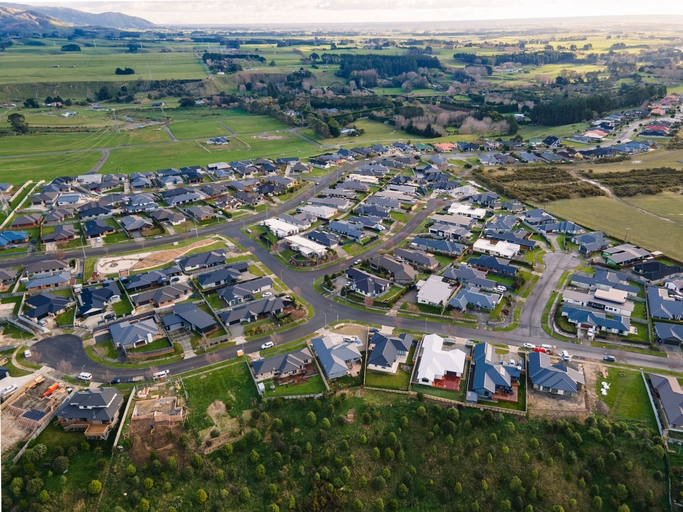
- Freeing up more land for homes by requiring big councils to meet new Housing Growth Targets. Tier 1 and 2 councils will need to “live-zone” commercially feasible development capacity for at least 30 years of housing demand, rather than just a few years at a time. The aim is to flood the market with development opportunities so land prices and, over time, house prices come under pressure.
- Letting cities grow both up and out. The Government plans to strengthen intensification rules in the National Policy Statement on Urban Development (NPS-UD), especially around rapid transit and major transport corridors, while also making it easier to expand at the urban fringe. Rural–urban boundaries will be removed from plans and ministers are working towards a de facto “right to build” at the edge of cities where developers can cover the cost of infrastructure.
- Making better use of urban land. Councils will be required to enable more mixed-use neighbourhoods, with homes closer to shops, cafés, supermarkets and offices. They will also lose the ability to set minimum apartment sizes or mandatory balcony rules. The aim is to bring down the cost of smaller dwellings and give people more choice, particularly in central locations.
Alongside this, the Government will make the Medium Density Residential Standards (MDRS) optional for councils, on the condition that they still meet tougher growth and intensification expectations. Further changes to infrastructure funding and financing are on the way, with the stated goal that “growth pays for growth” so new development is not held back by the cost of pipes and roads.
The Government's plan is to tackle the housing crisis by pushing councils to allow cities to grow both up (intensification) and out (expanding the urban fringe).
Flagship planning reform: RMA replacement
A significant reform is the replacement of the complex, 30-year-old RMA with two new laws, introduced to Parliament on December 9, 2025:
- The Planning Bill: Will lay out how land can be used and developed, including planning for housing growth.
- The Natural Environment Bill: Will lay out the rules for managing the use of natural resources and protecting the environment.
In short, the policy direction is to radically expand where and how homes can be built, by opening up more land, loosening some planning controls, and asking councils to zone significantly more capacity than in the past. Whether this translates into the scale of new housing needed will depend on how quickly the reforms are implemented, how councils respond, and how developers and lenders react to the new rules.
Is the housing crisis improving?
There are some positive signs in the data. House prices have eased from their peak, rents have softened, and the social housing waitlist has reduced from crisis highs. But affordability remains stretched, affordable housing supply is still lagging behind demand, and families on low incomes continue to face some of the toughest conditions.
In other words: things are stabilising, but not solved. Most experts agree the crisis isn’t “over” and it's likely to take years to recover.
What might help solve the crisis long-term?
Based on research from Te Waihanga, HUD, and housing advocacy groups, there are a few changes that could make the biggest difference over time:
1. Freeing up more land for homes
Making better use of well-located urban land (especially near town centres and transport routes) would make it easier to build more homes in the places people want to live.
2. Improving planning and consenting
A faster, more consistent consenting system is essential for unlocking the tens of thousands of homes New Zealand needs. This includes stronger national direction for councils, more streamlined approvals, and simpler rules.
3. Better infrastructure
New housing can’t be built without water, roads, power, and community facilities. Continued investment is critical for supporting new developments, especially through tools like the Infrastructure Acceleration Fund and IFF financing.
4. Healthier, more secure rentals
The Healthy Homes Standards are lifting the quality of rental housing, but enforcement and continued improvements will be key to helping low-income households and families with children.
5. More social and affordable homes
Long-term affordability will depend on growing supply at all levels, including public housing, community housing, and Māori-led developments.
What this means for buyers, renters, and families right now
For first-home buyers
Saving a deposit remains the biggest hurdle. With asking prices stabilising and KiwiSaver balances growing, some buyers may find conditions a little easier, but reaching a 20% deposit is still difficult for many. Exploring shared-ownership options, new builds, or more affordable regions can help.
For renters
Rents have softened slightly, but remain high compared to incomes. With the overall supply of rentals still tight in some regions, healthy home standards, tenant rights, and budgeting tools remain important.
For families and vulnerable households
Housing quality and crowding issues continue to shape children’s health and wellbeing. Support is available through community housing providers, non-profit organisations, and government agencies for those living in unsafe or inadequate homes.
An optimistic future
New Zealand’s housing crisis was decades in the making. It’s the result of planning constraints, infrastructure bottlenecks, rising costs, and a long-term shortfall in supply. Recent data shows we’re heading in the right direction: prices and rents softening, social housing waitlists reducing, and a stronger pipeline of public and Māori-led housing underway.
But these gains will take time to filter through, and affordability remains a major challenge for many households. The Government’s reforms, from fast-track consenting to infrastructure investment and place-based partnerships, are steps in the right direction, but meaningful progress will require sustained, long-term action.
For now, the housing landscape is shifting, but the core pressures remain. And while the path forward is slow, it is moving. One policy, one consent, and one new home at a time.
Author
Other articles you might like