News Next article
Diversity, Equity & Inclusion at Trade Me
Pride Pledge, Minding the gap and our ENGs
9 November 2026Trade Me’s purpose is to connect Kiwi to create the life they want. We know embracing diversity, equity and inclusion (DE&I) has a positive impact on our products and services. This helps us foster a greater sense of belonging at Trade Me and within communities across Aotearoa.
Our Focus
A key focus of Trade Me’s DE&I strategy is to reduce our gender pay gap. We pay all our people the Living Wage, we actively calibrate our pay and promotion discussions to prevent gender bias, and we’ve been taking a deliberate approach to achieve good gender representation for leaders and in other key areas.
We look at gender representation and pay
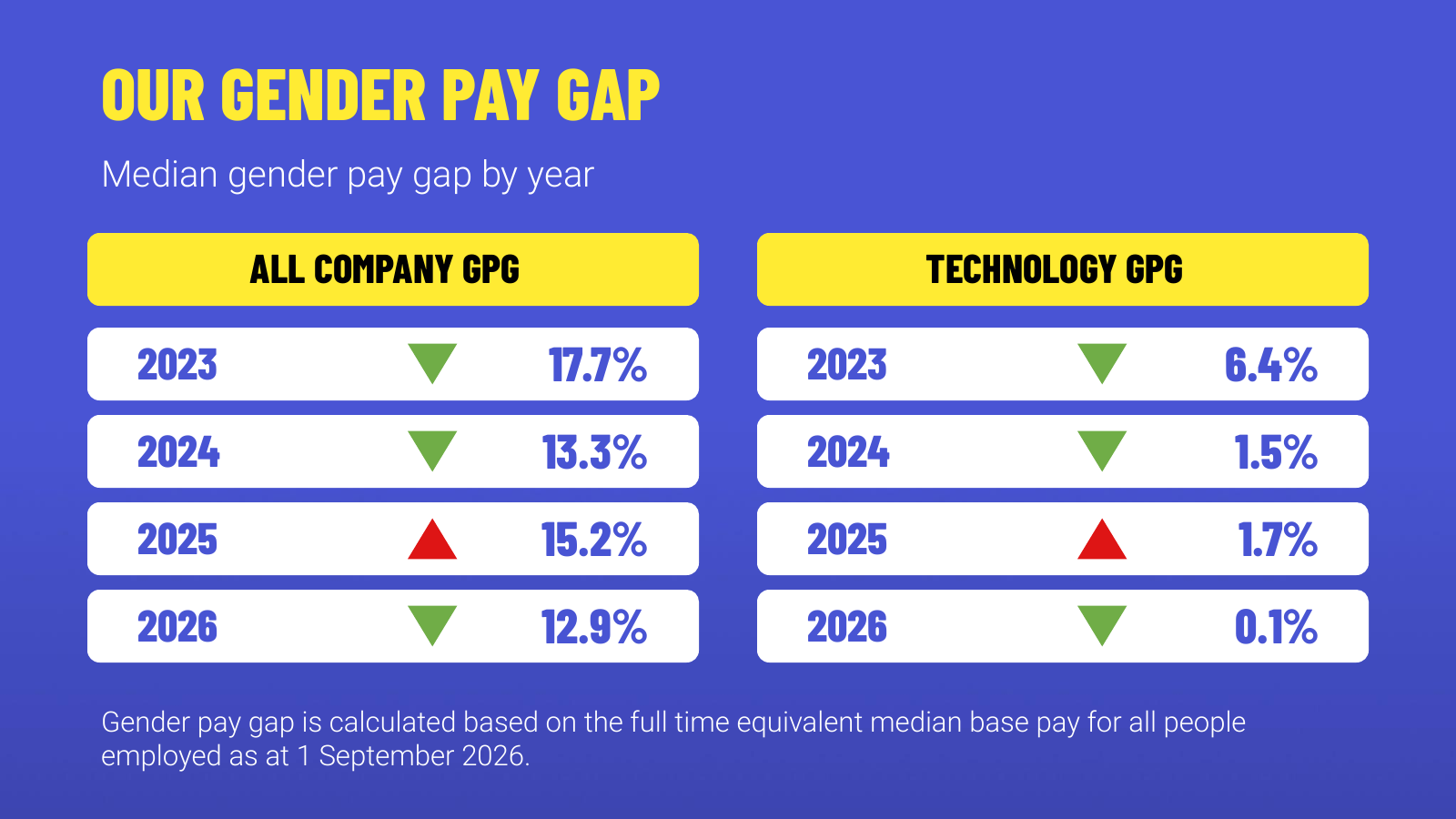
Since we started reporting in 2023, our gender pay gap has dropped by 4.8 percentage points, from 17.7% to 12.9%, our lowest result so far. In 2025, our gender pay gap increased to 15.2%, and we committed to understanding and addressing the drivers. This year, our overall median gender pay gap has reduced by 2.3 percentage points to 12.9%, and our Technology gender pay gap has reduced to 0.1%. Women’s median pay increased by 4.3% compared with 1.6% for men.
We achieve pay equity at Trade Me by having a highly standardised, robust pay practice. This practice ensures that different work of equal market value is paid at the same rate regardless of gender.
The primary source of our gender pay gap remains an imbalance in representation across the company. Simply put, we still have fewer women in higher-paid roles and more women in lower-paid roles, although this year the number of women in our more senior career levels grew.
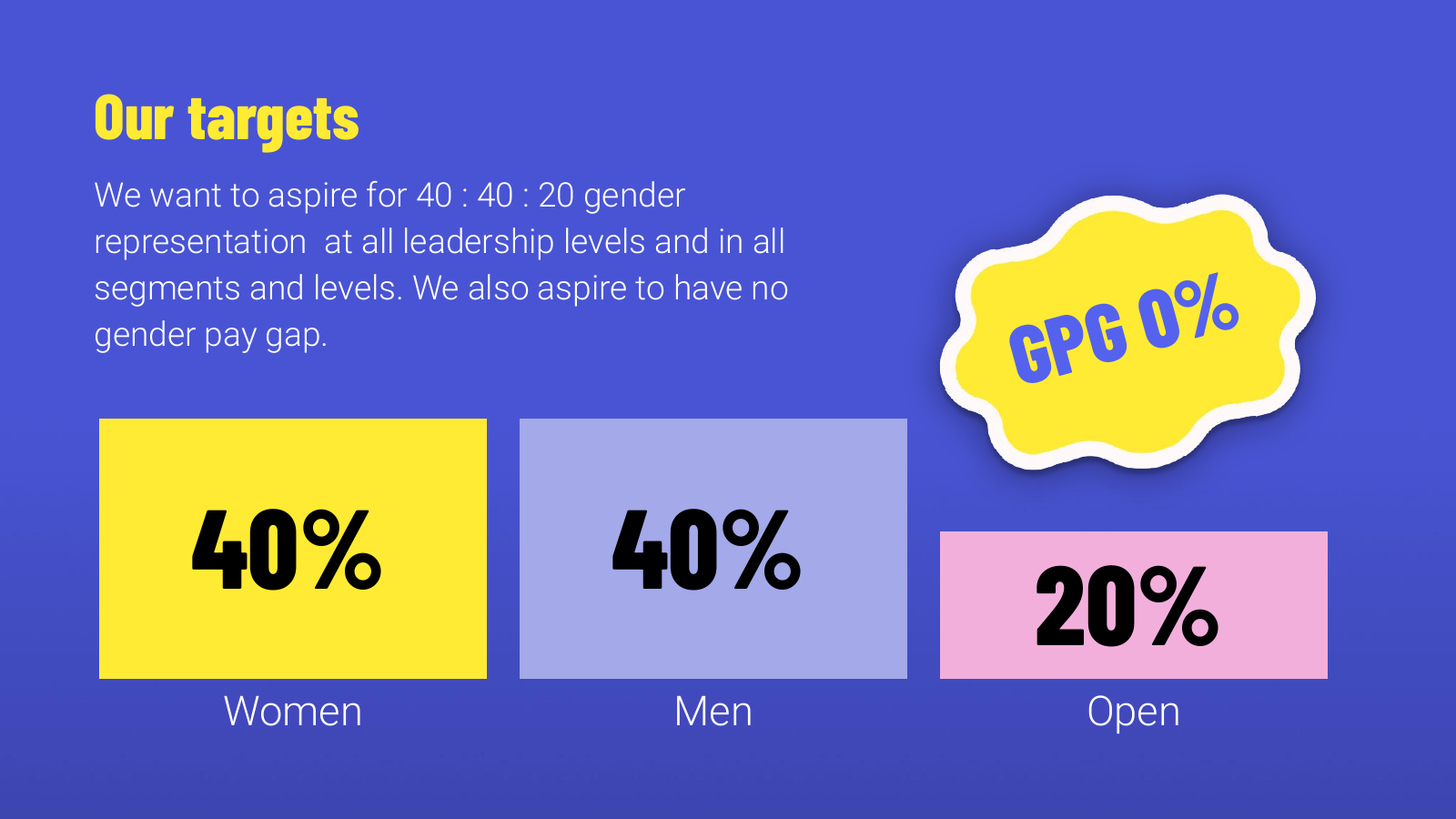
We continue to maintain strong gender representation across our leadership levels, with representation meeting our aspiration for 40:40:20 representation, and women now make up 57% of our Executive Team.
Women in Technology
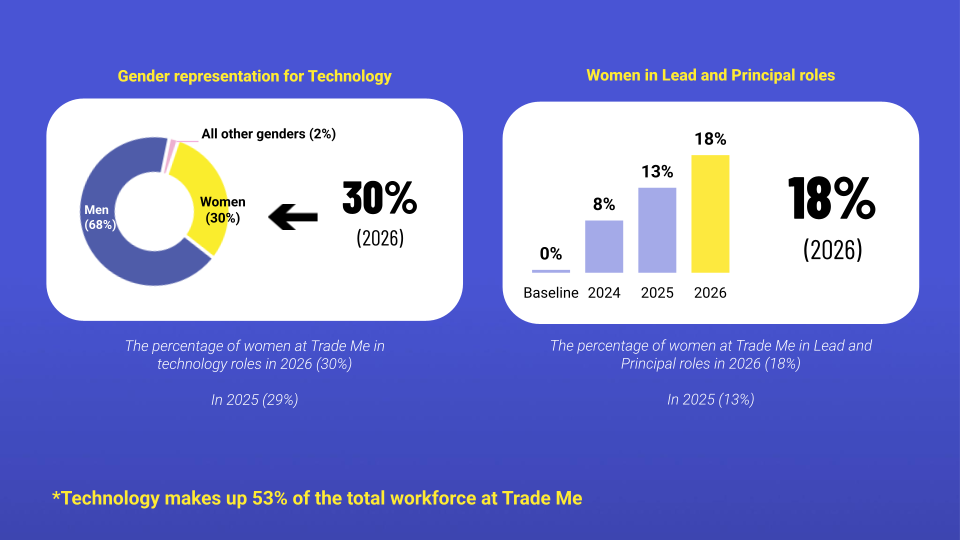
Over half of our entire workforce is currently employed in Technology roles. Consistent with wider industry trends, these teams have a significantly higher proportion of men. Because this represents the largest segment of our business, we have identified Technology as the key area of focus required to effectively shift our overall gender pay gap (GPG).
Since 2022, we have applied a data-driven, experiment-based approach to create systemic change. Our objectives are to maintain the percentage of women in technical roles, double the percentage of technical leaders who are women, and ultimately eliminate our GPG.
We are proud that this focus is already driving results. To date, we have increased the percentage of women who apply and are interviewed, increased the percentage of promotions awarded to women, and reduced our Technology gender pay gap from 6.4% in 2023 to 0.1% in 2026. Furthermore, our Special Measures Policy has been particularly successful. Women in Lead and Principal roles rose from 0% at baseline to 18% in 2026, up from 13% in 2025.
How we’re continuing to tackle our gender pay gap
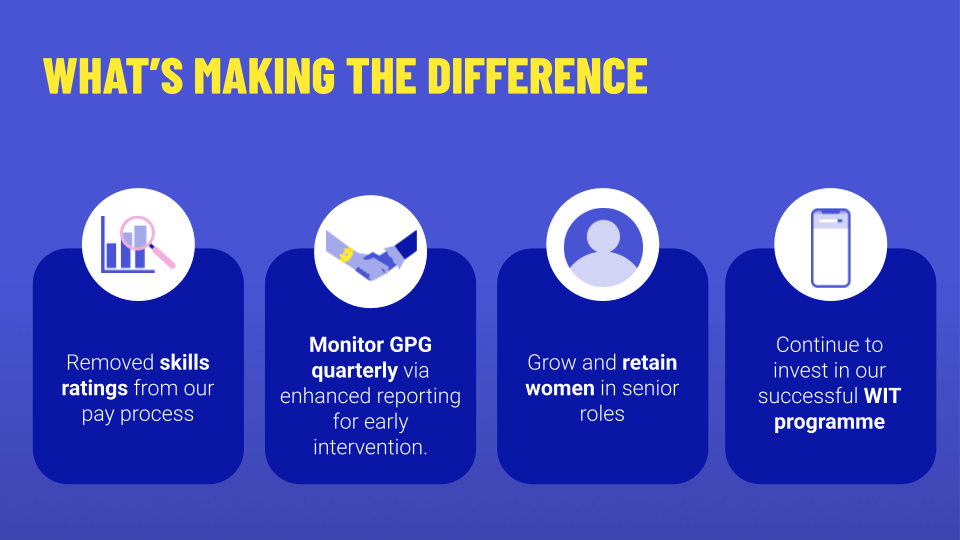
- Robust pay practices: Our 2025 review found that skills ratings were not a reliable or objective measure of skill, so we removed them from our remuneration process. Pay progression now follows role, market comparison and performance, and we check gender outcomes before pay review and promotion decisions are signed off.
- Regular reporting: We now track gender pay gap lead indicators every quarter, with a deeper review aligned to our end-of-year cycle, so we can identify emerging trends and take early action.
- Growing and retaining women in senior roles: We are building succession pipelines of women for our Senior Leadership Team, and working to understand what is behind leadership and recent-starter exits.
- Women in Tech programme: As well as continuing with our Special Measures policy and external networking to attract more women into senior roles, we are supporting our internal women in tech through a range of initiatives including development programmes, and the establishment of our women in technology employee network group.
What we are doing about it


