Careers advice
How to become a security guard in NZ: CoA licence, training and career growth
Thinking about a career in security? Here’s everything you need to know about becoming a security guard in Aotearoa.
Last updated: 8 May 2026
Security is one of those industries that keeps New Zealand running. Whether it’s keeping people safe at a massive concert, protecting high-value goods, or being the friendly face at a corporate front desk, security guards are the backbone of public safety.
If you’re someone who stays calm under pressure, likes helping people, and wants a job with genuine variety, security could be your calling. But you can't just throw on a high-vis vest and start patrolling; there’s a clear path you need to follow to get qualified and licensed.
Why choose a career in security?
The security industry in New Zealand is booming. With a constant demand for personnel in retail, events, government, and private sectors, job security is high. It’s also a role that offers incredible flexibility - if you’re a night owl, there are plenty of graveyard shifts, but if you prefer the 9-to-5, corporate security is a great shout.
Beyond the paycheck, you’ll be developing skills that are useful in every part of life: de-escalation, situational awareness, and first-class communication.
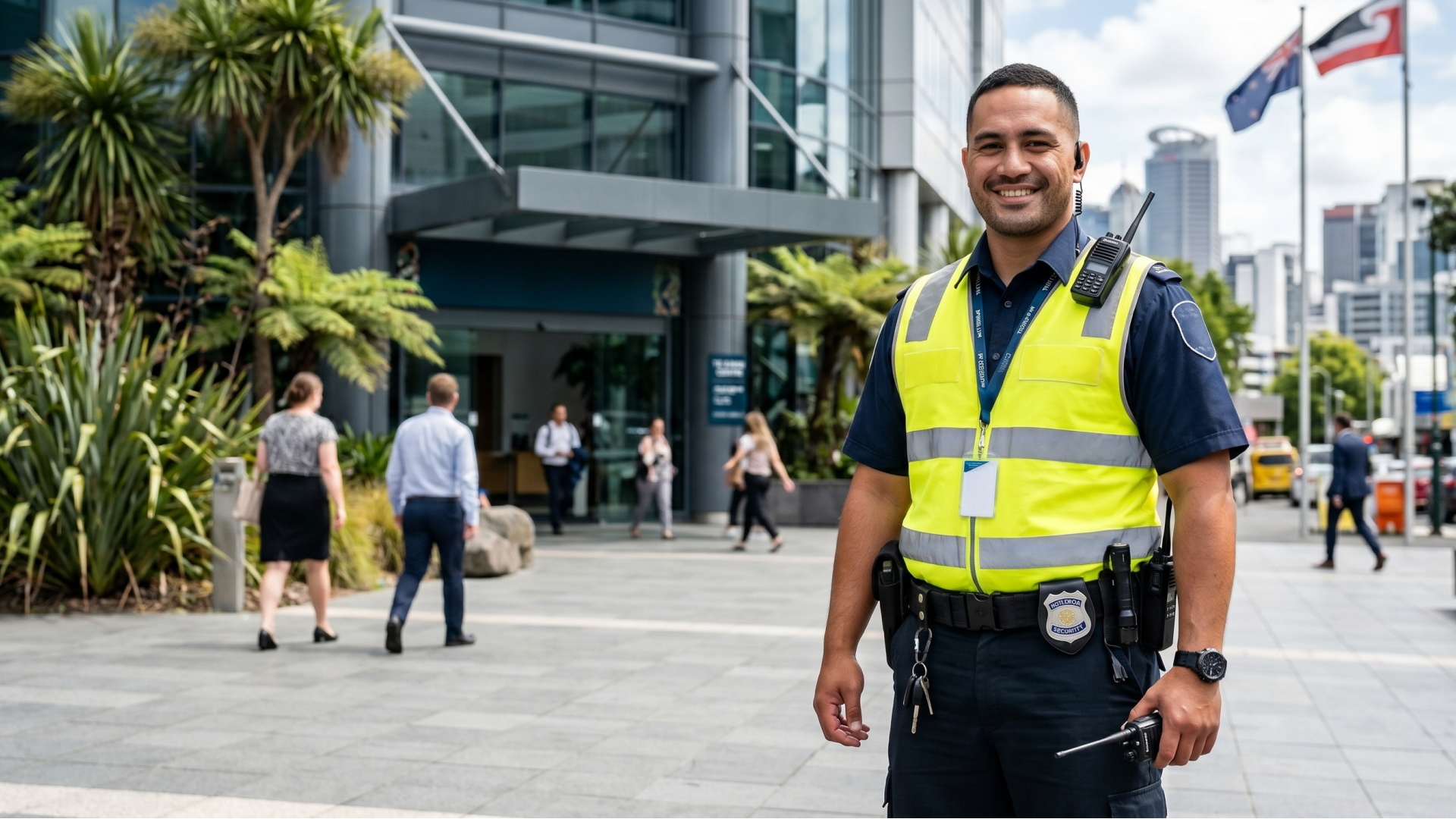
A career in security can lead to a diverse range of pathways.
The essentials: Getting your CoA licence
In New Zealand, you legally cannot work as a security guard without a Certificate of Approval (CoA). This is issued by the Private Security Personnel Licensing Authority (PSPLA), which is part of the Ministry of Justice.
Think of the CoA as your driver’s licence for the security world. To get one, you must:
- Be 18 years or older.
- Be a New Zealand citizen, resident, or have a valid work visa.
- Pass a clean slate or criminal record check (the police will vet you).
- Complete the mandatory training.
You can apply for a "Temporary CoA" which allows you to start working while you finish your training, but you’ll need to complete your unit standards within three months to keep it.
Mandatory training and unit standards
To get your permanent CoA, you need to complete three specific NZQA unit standards. These cover the basics of the law, how to handle conflict, and your responsibilities as a guard:
- US 27360: Explain the roles and responsibilities of a security staff member.
- US 27361: Manage conflict situations in a security context.
- US 27364: Explain the law and the use of force within a security context.
Top security training providers in New Zealand
Many big security firms will actually pay for your training if you sign on to work for them, but if you want to get qualified independently, here are some of the best places to start:
- Service IQ: They offer various certificates in security that cover the mandatory unit standards and more.
- Skills Institute: Industry first approach where you’ll get real-world training with flexible study options.
- Red Badge Group: A well-known Kiwi employer that provides comprehensive internal training for their staff.
- C4 Group: Specialist providers focused specifically on security and risk management training.

The best security guards are often the ones who can talk their way out of a situation
Career paths: Where can security take you?
You might start out on a gatehouse or doing foot patrols, but the career ladder in security is surprisingly long. Once you’ve got some experience under your belt, you can specialise in:
- Bodyguarding: Working with high-profile individuals.
- Electronic security: Installing and monitoring high-tech CCTV and alarm systems.
- Cash-In-Transit: Transporting money and valuables in armored vehicles.
- Security management: Leading teams and designing safety protocols for major companies or government departments.
- Private investigation: Using your observation skills to solve problems and find information.
What will you earn as a security guard?
Pay rates in security have seen a healthy bump recently with entry-level roles typically starting around the $24-$27 per hour mark.
If you move into specialised roles or management, that figure climbs significantly. Corporate security managers or high-level risk consultants can earn anywhere from $80,000 to over $120,000 per year.
Essential skills for the job
It’s not all about being big or strong. In fact, the best security guards are often the ones who can talk their way out of a situation. You’ll need:
- Communication: Being able to give clear instructions and listen to people is vital.
- Patience: There can be long periods of quiet followed by moments that require instant action.
- Sharp observation: Noticing something that "doesn't look right" before it becomes a problem.
- Integrity: You are in a position of trust; being honest and reliable is non-negotiable.
How to get started today
If you’re ready to get stuck in, your first step is to check your eligibility on the PSPLA website. Once you know you’re eligible, look for "Trainee" or "Entry Level" security roles, many companies will help you through the licensing process.
When you’re ready to start applying, make sure your Trade Me Jobs Profile is up to date for better visibility with Kiwi employers.
Ready to get stuck in? Start searching for your next security job on Trade Me Jobs today.
Author

Other articles you might like