Discover
‘Delightful time capsule’: Award-winning beachfront bach listed 50 years on
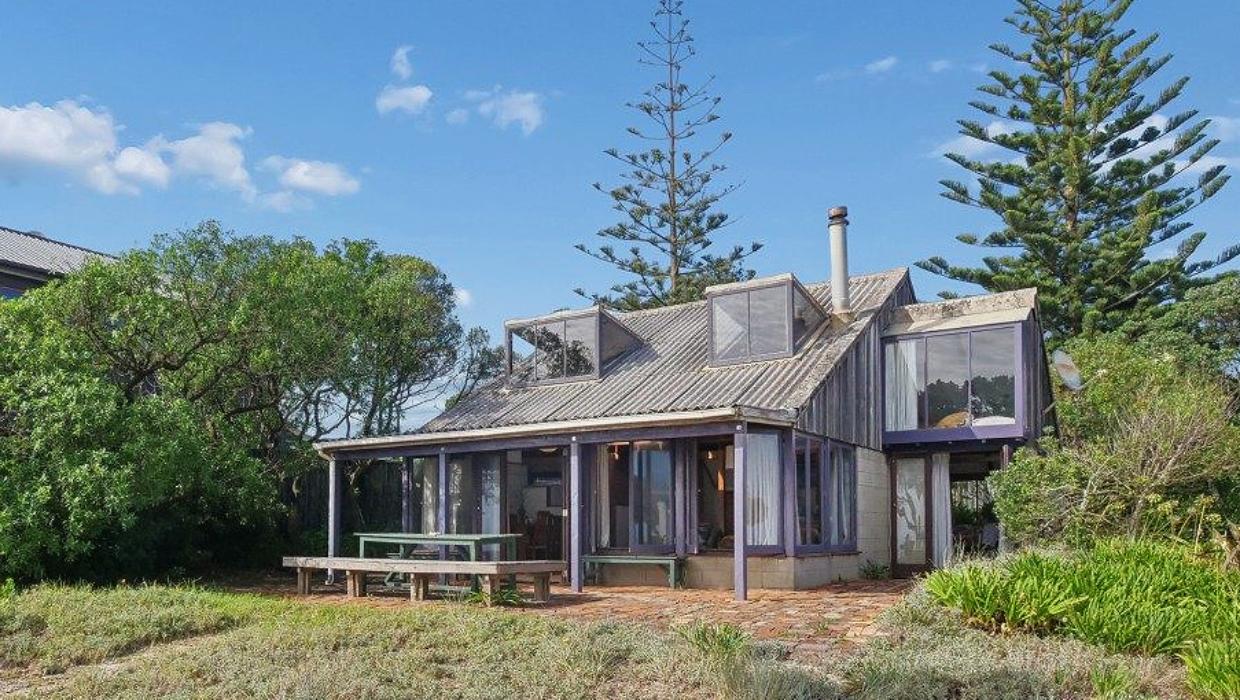
This beachfront Papamoa bach was designed in 1972 by the son of the owners while he was still an architecture student.


AI summary
A rare, award-winning Papamoa bach at 135 Karewa Parade is for sale after 50 years with the same family. Designed by architect David Page in 1972, this beachfront property won a prestigious NZIA Enduring Architecture Award and is celebrated as a "delightful time capsule."
Built with robust cedar and concrete block, it features a heart rimu interior and sleeps up to 13 guests. This unique piece of architectural history is listed by Bayleys Papamoa.
Bach of the Week is a summer series featuring hideaways, beach shacks and lakeside properties for sale, which have been idyllic, yet often basic boltholes for the owners.
We don’t usually associate classic Kiwi baches from the ‘60s and ‘70s with architecture awards - mainly because they are more about nostalgia than great design, although no less significant because of that.
But this bach at Papamoa Beach ticks both those boxes. And what is especially remarkable, is the fact it has been in the same family since it was built in 1972. Architect David Page designed it for his parents while he was still an architecture student, and four generations of Pages have enjoyed lazy days here at the beach.
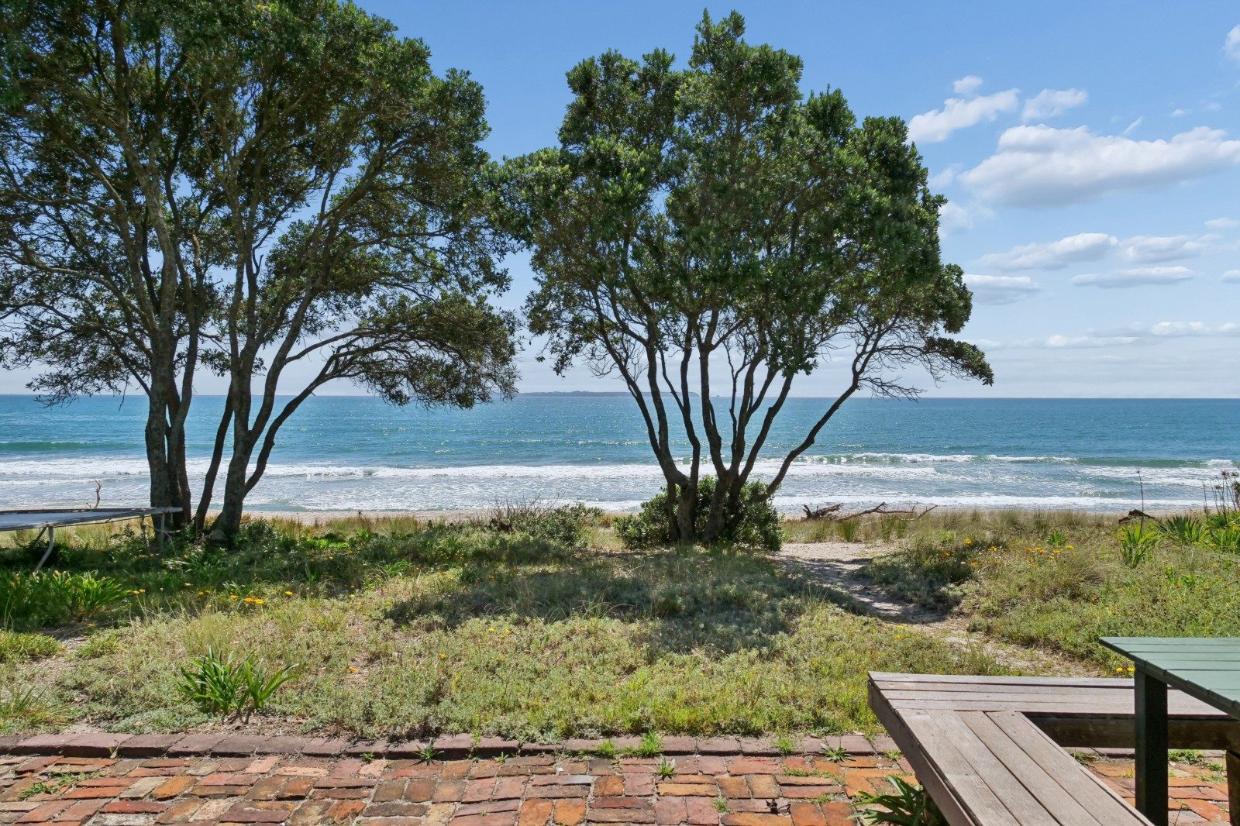
There’s a pathway across the dunes to the beach. The raised dune was not flattened to build the bach, rather the bach rises up behind it, and has a sheltered outdoor space out of the wind off the sea. Photo: Bayleys
In 2017 David Page won a local NZIA Enduring Architecture Award for the house, with the NZIA describing it as “a delightful time capsule”.
Speaking to Stuff, Page says his parents pretty much gave him free rein when it came to the design: “It was designed obviously to make the most of the beach, and at that stage there were no other houses around, except for one.”
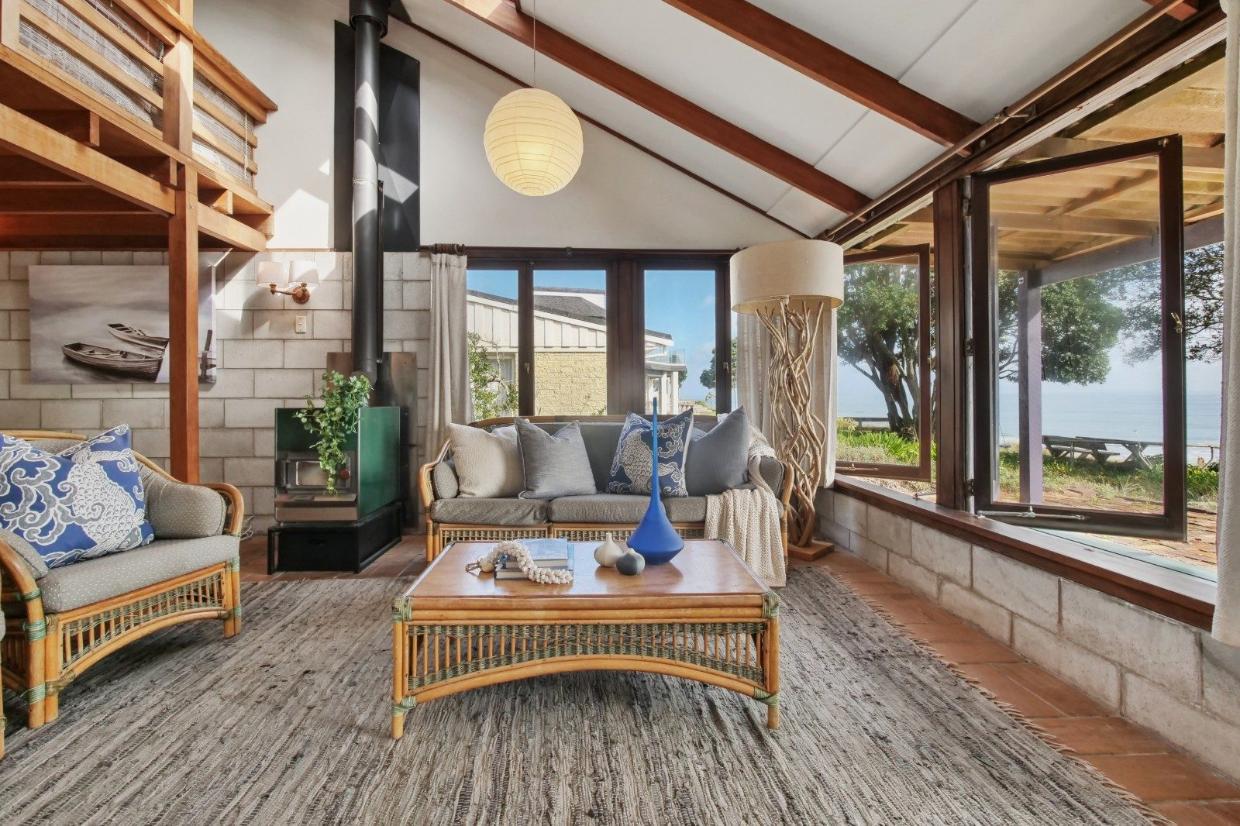
The bach was built from concrete block and cedar. Inside rimu features extensively. Photo: Bayleys
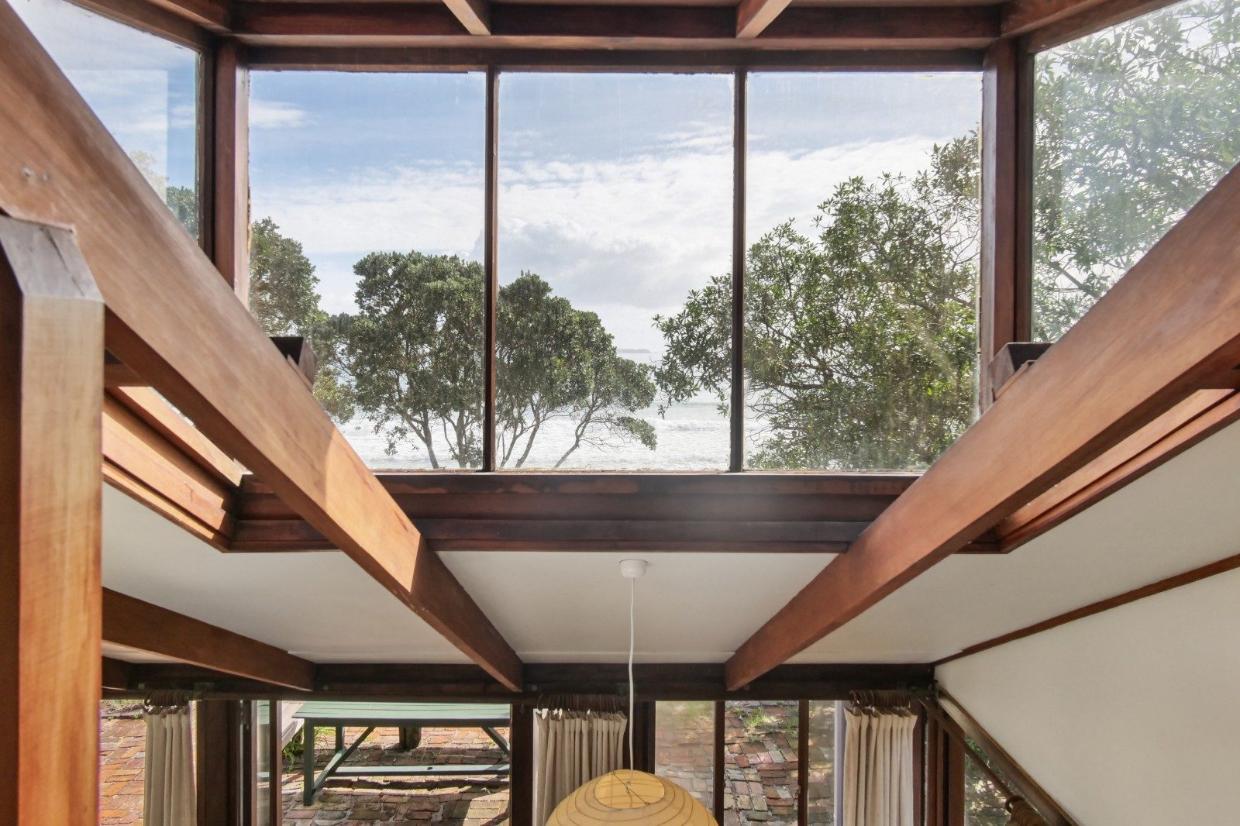
There has been no need for any alterations in five decades. Photo: Bayleys
He specified enduring materials, including concrete block and cedar board and batten for the exterior: “The environment on the coast here has lots of salt, lots of sand and lots of acid from White Island, so you’ve got to have pretty robust materials. Neither the concrete block nor the cedar have been touched in the 50-odd years, which was the benefit.”
“All the interior timbers are heart rimu - materials that were easy to get in those days.”
Inside, the house has a warm, cosy living space with a woodburner. There are mezzanine bedrooms above, and a “crow’s nest” - the exposed rimu beams and high windows make this the most perfect spot to retreat with a good book - there’s no TV in the house.
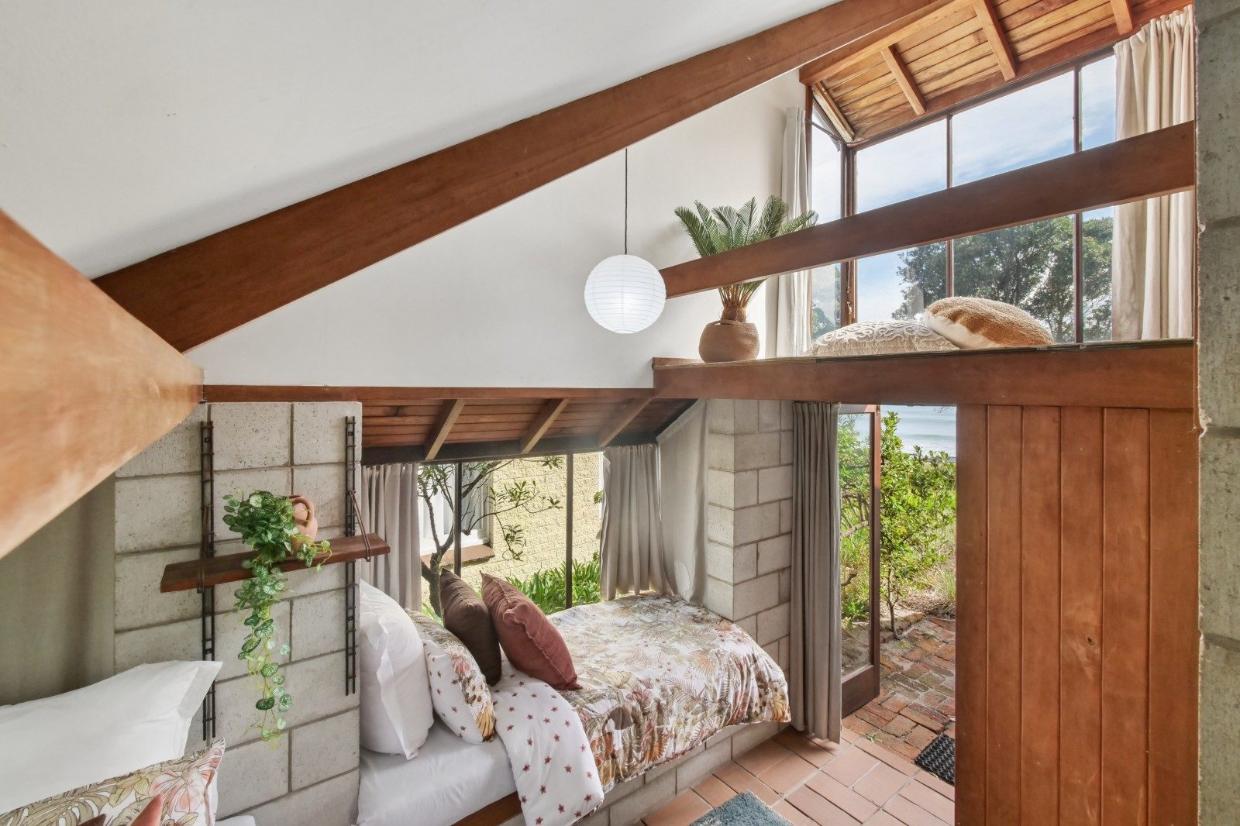
Window seats double as beds. The “crow’s nest” can be glimpsed on the upper right. Photo: Bayleys
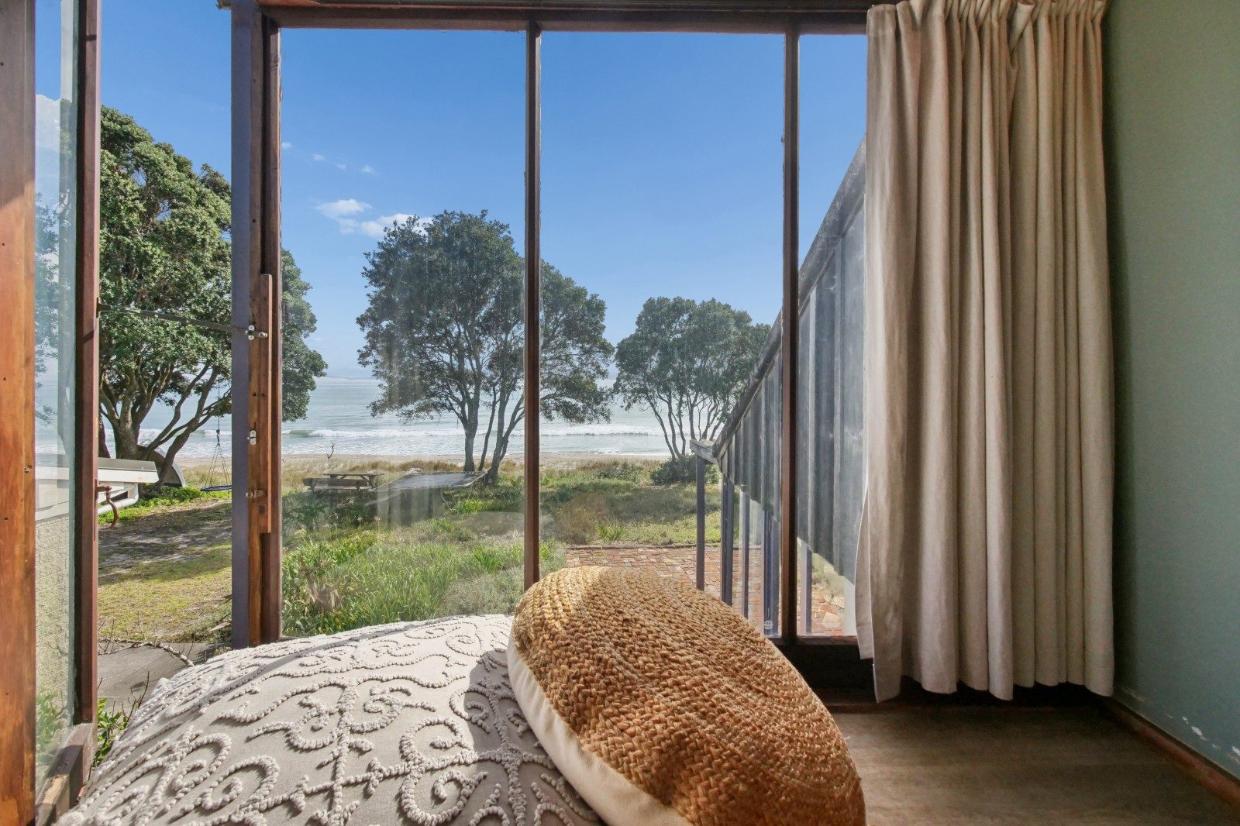
This is the “crow’s nest” - a perfect reading spot. Photo: Bayleys
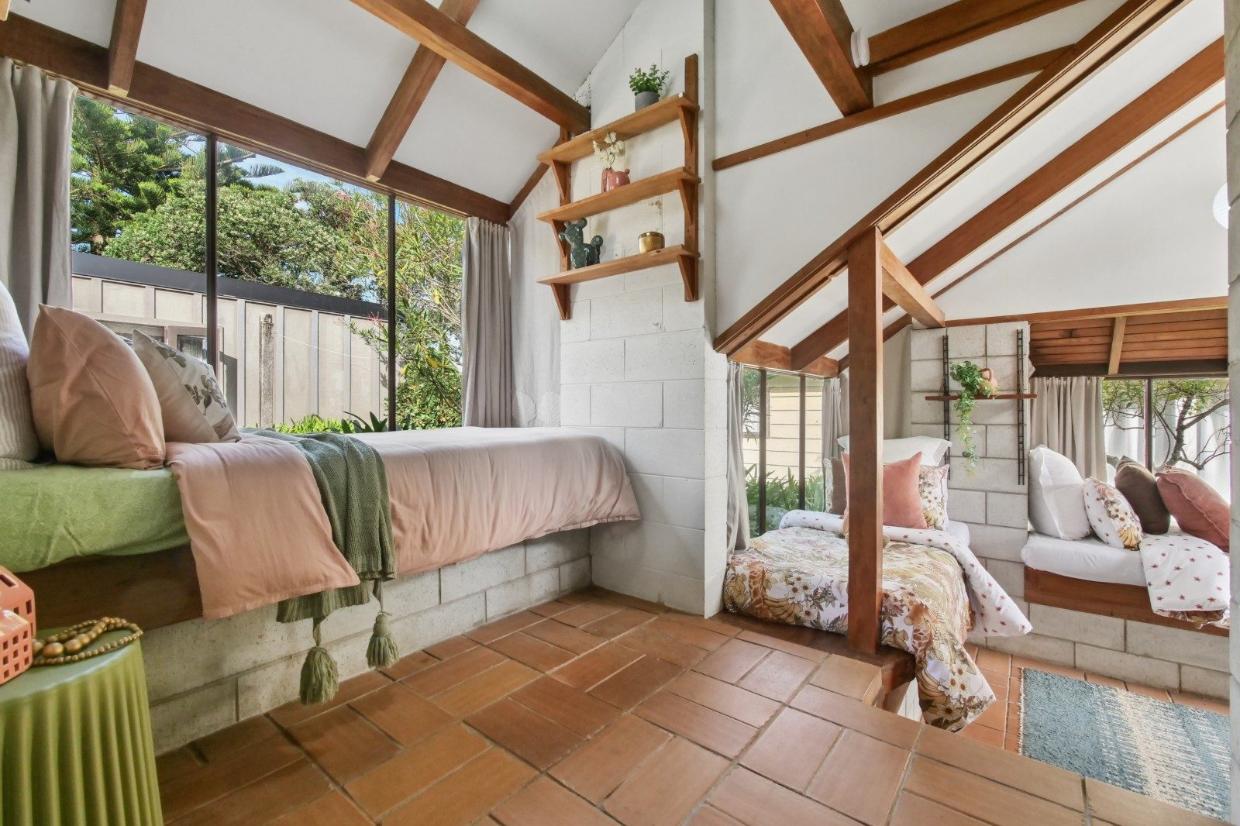
The house and studio can accommodate 13 people. Photo: Bayleys
The bach now has numerous owners, following the death of Page’s parents and two brothers. And the decision to sell has not been taken lightly. Discussions over the potential sale were first mooted several years ago.
Some of the things they will miss include surfing and swimming. “My mother, [when] in her 80s with a bad hip, would still go down for an early morning swim,” the architect says.
Fishing was another pastime. Page says they had an old Kon Tiki that used the barley sugar system - it would sail out in an off-shore breeze, and was ingeniously engineered so that when a barley sugar dissolved, the sail would drop and the sinker would drop down into the water.
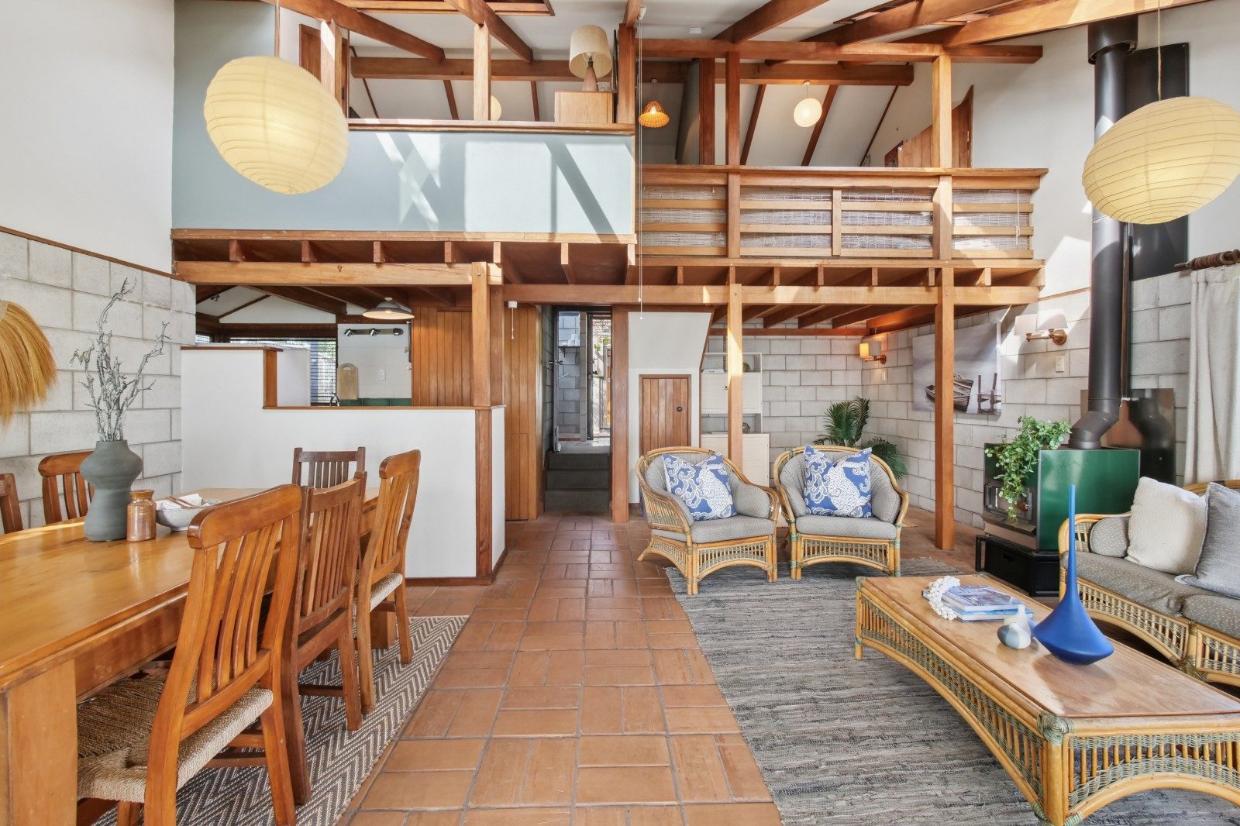
The entire living area is open plan - the mezzanine bedrooms can be glimpsed. Photo: Bayleys
Page says he hopes if a new buyer extends the bach, it will be altered with respect to the existing architecture - the family would not be keen to see it pulled down by a developer.
The NZIA jury knew full well the importance of the design, saying: “Every nook of this complex volume is occupied and enjoyed, and represents a crafted example of an architectural typology that has now come full circle - the tiny house.
“Simply materials innovatively and elegantly assembled reflect the patina of wear in a bach that sensitively occupies its coastal site, working with the natural undulations of the dunes.”
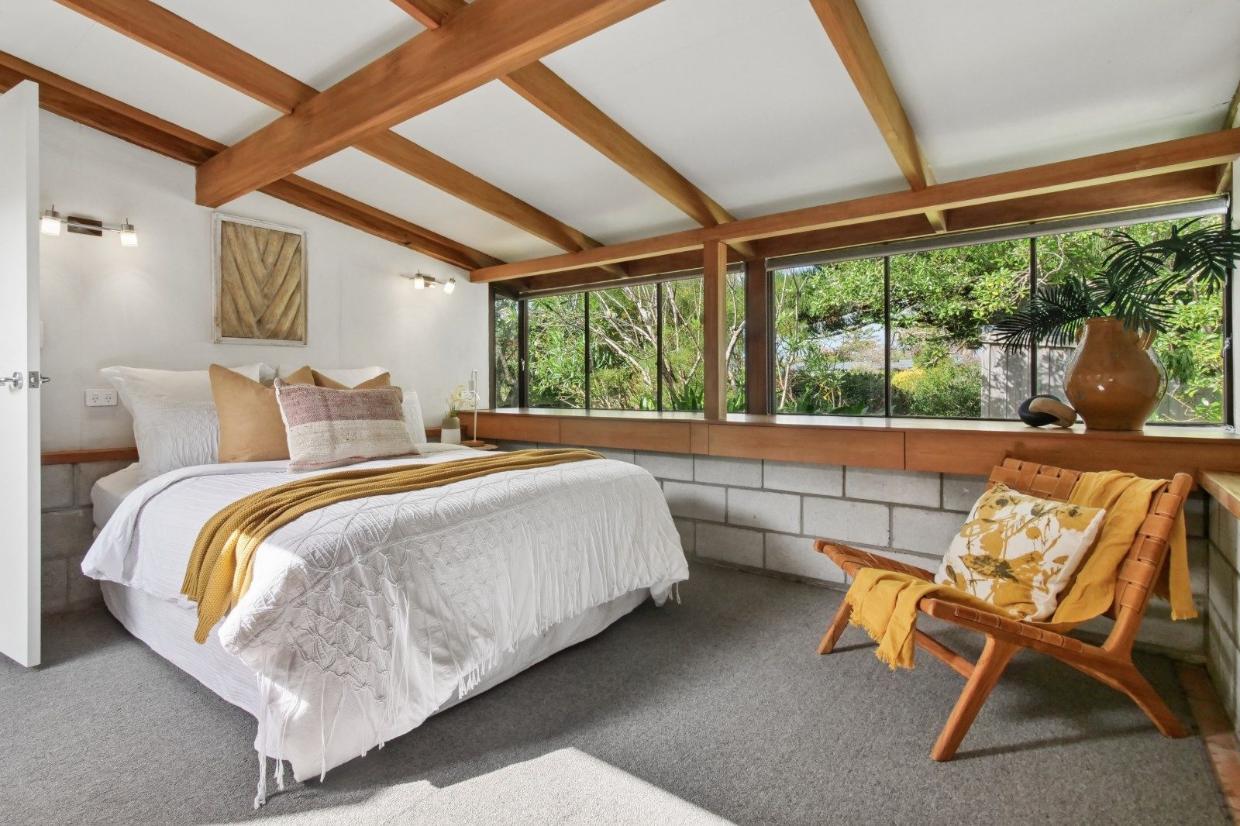
The house won an Enduring Architecture Award in 2017. Photo: Bayleys
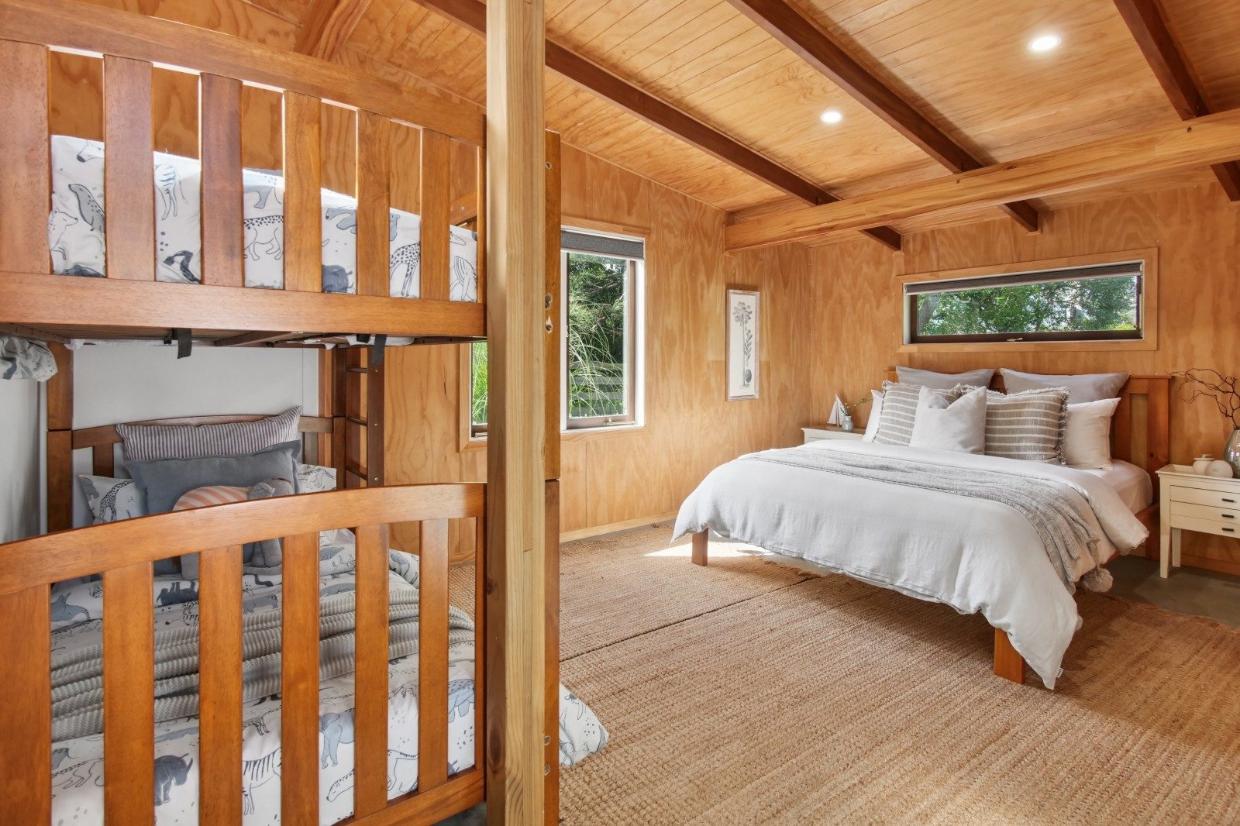
This is the studio that was built for the architect’s mother, who was a painter. Photo: Bayleys
Angela Fleet of Bayleys Papamoa, who holds the listing with Nick Fleet and Ashlea Pead, says the bach is in an “idyllic location”. “One can imagine how much fun they have had here. It’s heavenly.”
The property, at 135 Karewa Parade, Papamoa, has an auction date of March 18, 2026. It has an RV of $2.39 million.
Property market update: The latest figures from Trade Me Property show the average asking price of properties in the Bay of Plenty ($958,300) showed a slight decline in January, with prices down by 0.5%.
“However, prices in the region are up by more than 4% year-on-year,” Trade Me Property's custom director Gavin Lloyd says. The bay has the second highest average asking price in the country.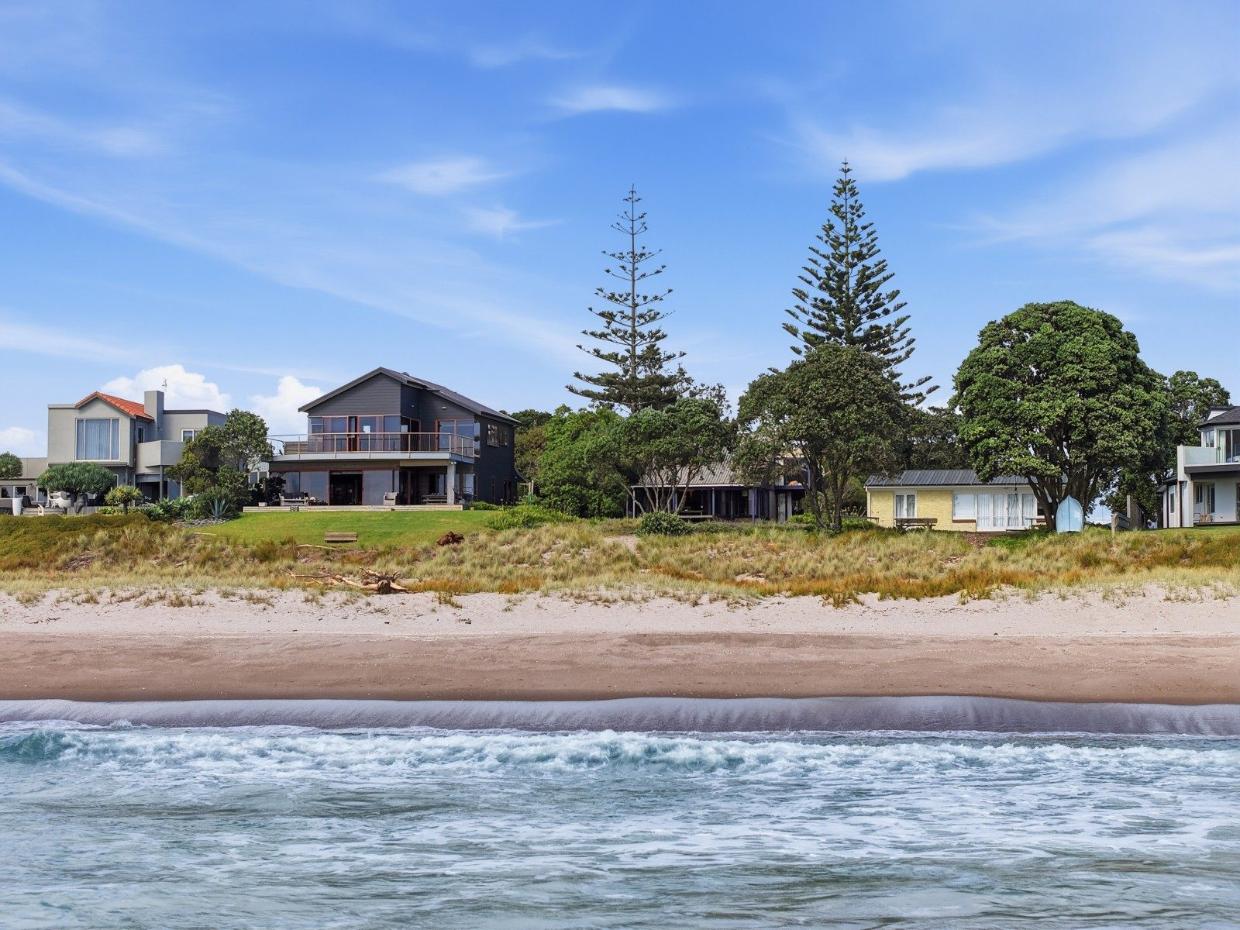
The bach is right in the middle of this photo “between” the two Norfolk pine trees. Photo: Bayleys
“Auckland’s surge can be partly attributed to an increase in the number of properties available for first-home buyers under $800,000, alongside a boom in the luxury market."
Lloyd points out that both Auckland and the Bay of Plenty are indicative of broader market trends across the country.
The Bay of Plenty's luxury market, with more properties listed above the $2 million mark, contrasts with Auckland's market that remains more diverse, catering to both first-time buyers and high-end investors.
Author
Discover More
Wellington property market: agency heads say confidence is back
Wellington’s two biggest agencies say offers, listings and first home buyers are up, and early 2027 looks busy.
Vice City, Aotearoa: Homes for sale with serious Miami energy
We've rounded up palm-fringed, boat-out-the-back homes for sale that could pass for Vice City, as GTA VI fever builds.


Search
Other articles you might like