Buying guide
How Much Storage Do You Need? An NZ Storage Unit Size Guide
An Auckland storage operator explains how to find a unit that's the right size, secure and easy to get to.


AI summary
Choosing the right storage unit requires careful consideration. Kiwi Self Storage advises that taller ceilings offer more value, and a typical three-bedroom home needs about 24m³ of space. Don't just focus on size.
Key factors to evaluate include:
- Security: Prioritise facilities with on-site managers, CCTV, and individual alarms.
- Condition: Ensure units are clean and dry to protect items from humidity.
- Access: Check location, hours, and how easy it is to load/unload.
- Insurance: Confirm your policy covers stored goods.
Always take a tour before committing to a unit.
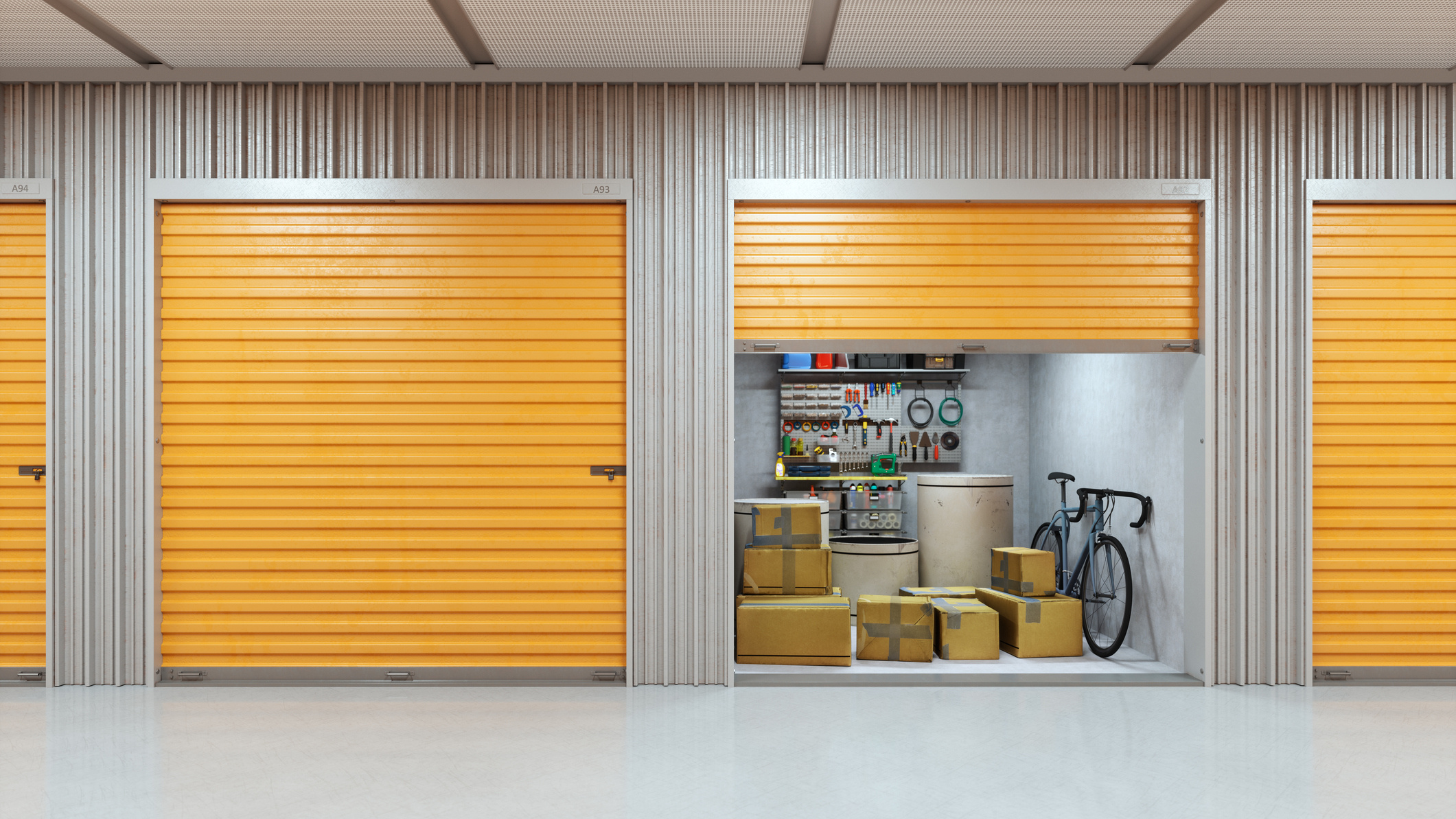
Whether you're between houses, renovating or just out of garage space - a storage unit can take a lot of pressure off. But not all storage in Auckland is equal, and getting the size right makes a big difference.
We asked an expert - Jack Dromgool, Operations Manager at Kiwi Self Storage, what to look for before you sign up. The New Zealand-owned self storage company has been in the industry since 1997, with three sites in Auckland, one in Wellington and hundreds of great reviews.
| Unit size | Volume | Roughly fits | |||
|---|---|---|---|---|---|
| Small: Under 4.5 m², e.g. 1.5x1.5 to 2x2 | Small: Under 4.5 m², e.g. 1.5x1.5 to 2x2 | 4.5-11m³ | 4.5-11m³ | Contents of a small bedroom up to a one-bedroom apartment | Contents of a small bedroom up to a one-bedroom apartment |
| Medium: 4.5 to 9 m², e.g. 1.5x3 to 3x3 | Medium: 4.5 to 9 m², e.g. 1.5x3 to 3x3 | 12-24m³ | 12-24m³ | Contents of a one to three-bedroom home | Contents of a one to three-bedroom home |
| Large: over 9 to 18 m², up to 6x3 | Large: over 9 to 18 m², up to 6x3 | 25-48m³ | 25-48m³ | Contents of a large family hom | Contents of a large family hom |
| Extra large over 18m2, up to 40m2 | Extra large over 18m2, up to 40m2 | 49-108m³ | 49-108m³ | Contents of an extra large family home or commercial stock and equipment | Contents of an extra large family home or commercial stock and equipment |
(These are a guide only. Sizes available vary between storage facilities, and how much fits depends on what you're storing. )
When comparing storage units, look beyond the floor area. Ceiling height matters too – the taller the unit, the more you can fit in if you stack efficiently. While many storage facilities have ceiling heights of around 2.4 metres, Kiwi Self Storage's units are all at least 2.7 metres high, giving you more usable storage space.
Get the size right
Paying for space you don't use is the easiest way to overspend. Make a rough list of what you're storing, measure the big items, and think about whether you'll need to get at things regularly - if so, leave room for a walkway.
Most providers have a size guide to help. Kiwi Self Storage has a space calculator that can make it easier to work it all out:
"Most people overestimate how much space they need. Shelving makes a big difference - if you can stack to the ceiling, you can often drop down a size and save money every week. Our units are higher than most ceilings at home, so you can fit a lot in them," says Jack.
"As a general rule of thumb we recommend around 24 cubic metres of storage for a three-bedroom home."
Look for security you can actually see
Every facility will tell you it's secure, so look for the details: CCTV, PIN-controlled gate access, perimeter fencing, good lighting and individually alarmed units.
It's also worth asking who responds if something goes wrong after hours. At some facilities, resident managers live on site, so they can respond to security problems extremely quickly:
"Cameras are great, but having someone living on site means that if an alarm goes off at 2am, there's a person there to check it - not just footage to look at the next morning," Jack says.
Make sure it's clean and dry
Auckland's humidity is hard on timber furniture, mattresses, books and electronics. When you visit, look for signs of damp, water stains or pests, and ask whether the units are fully enclosed and weatherproof. A tidy facility is usually a well-run one.
Check the location and access
A unit across town can cost you in time and fuel if you're in and out regularly. Choose somewhere close to home, work or the motorway, and check the access hours, whether there's drive-up or undercover loading, and how easy it is to move your goods in and out. At multi-level facilities, consider whether you'll be reliant on lifts and shared loading areas.
"You want a facility close to home or work, with good motorway access. Our facilities are all low-rise, with ground and first-floor storage only, making it quicker and easier to move goods in and out without navigating multiple levels or lengthy lift waits," says Jack
Sort your insurance and read the fine print
Don't assume your contents policy covers goods in storage - many don't, or cap what they'll pay. Check with your insurer, then compare that with any cover the facility offers. Either way, keeping a list and photos of what you store is essential.
"It's worth checking your existing home contents policy, as some insurers do not cover goods in storage. Alternatively, some storage providers, including us, offer insurance that can be arranged when you rent your unit. Regardless of which option you choose, it's important to make sure your belongings are adequately covered."
Before you rent a storage unit, ask about notice periods, minimum terms, and whether you can switch to a bigger or smaller unit if you've got the size wrong. A good provider will answer all of this upfront, in writing.

Check the facility's track record
How long a provider has been around tells you a lot, and so do its reviews. Read recent Google reviews, and pay attention to how the business responds when something goes wrong.
Independent ratings help too. Canstar Blue regularly surveys Kiwi storage customers on value, security and service.
Hot tip: Take a tour before you commit
The best way to judge a storage facility is to see it for yourself. Most providers are happy to show you around - walk the corridors, look at the unit you'd actually be renting, and ask the questions above. If the staff are helpful and the place is clean and secure, you've probably found the right fit.
Self storage FAQs
How much space do I need in my Auckland storage unit?
The size of the storage unit you need depends on the amount of items you need to store. As a general rule, a 1m x 2m unit fits a small studio apartment worth of stuff, a 1.5m x 3m will fit a one bedroom, a 2m x 3m will fit a two bed, and a 3m x 3m will fit a three-bedroom home.
What size storage unit do I need for furniture?
Furniture from a one-bedroom flat usually fits in a 1.5m x 3m unit. The contents of a three-bedroom home typically need a 3m x 3m unit. Every home is different, though, so it's worth using a space calculator or talking to the facility about what you're actually storing.
Can I change unit size once I've moved in?
Often, yes. At some facilities, including Kiwi Self Storage, you can upsize or downsize on move-in day if another size is available. If you think your needs might change, ask how easy it is to switch later.
How should I store things long term?
If you're storing for six months or more, store furniture off the floor on pallets, under breathable covers rather than plastic. Bag mattresses and soft furnishings, and pad between stacked items to avoid damage.
Author




Other articles you might like