What do property valuers look for?

Buying guide

What do property valuers look for?

How to know what your home is worth

Hannah Hilliam
Last updated: 25 February 2026 | 2 min read
AI

AI summary

A registered property valuation provides an accurate assessment of a home's worth, often required by banks for loans. Starting from around $1,000, these reports offer a comprehensive analysis for buyers and sellers.

Valuers assess several key factors:

- The house: Condition, size, layout, and materials.

- The land: Zoning, title type, and risks like flooding.

- The area: School zones, amenities, and street appeal.

The current market context and recent sales data are also crucial to determining the final figure.

Knowing what a property is actually worth is the ultimate "knowledge is power" move in the NZ market. Whether you’re trying to set a realistic asking price or making sure you aren’t overpaying for your dream home, a professional valuation takes the guesswork out of the equation.

In this article, we’ll explore what property valuers do and the factors they weigh up when assigning a dollar amount to a home in New Zealand.

Why people use property valuers

Registered property valuers are the authority on assessing property. These independent contractors are typically brought in by buyers, sellers, banks, or real estate agents to figure out exactly how much a building (and its land) is worth.

According to Alice O’Styke, a registered valuer and Tommy’s Real Estate agent, if you’re a first home buyer with a deposit of between 10 and 20%, the banks will probably ask you to get a professional valuation on the home before approving the loan.

Before you go for the full report, you’ll likely gauge the price in a couple of ways:

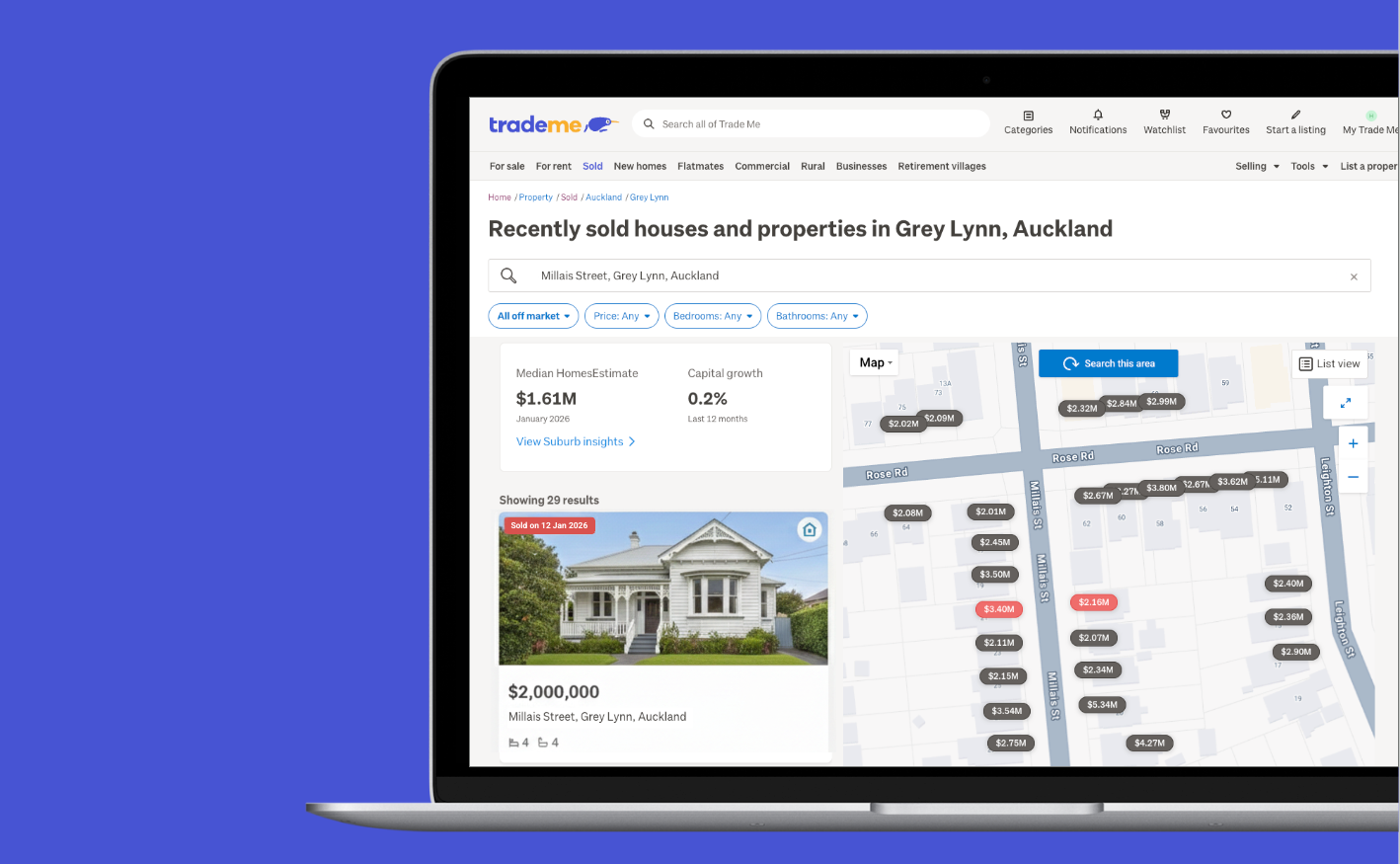
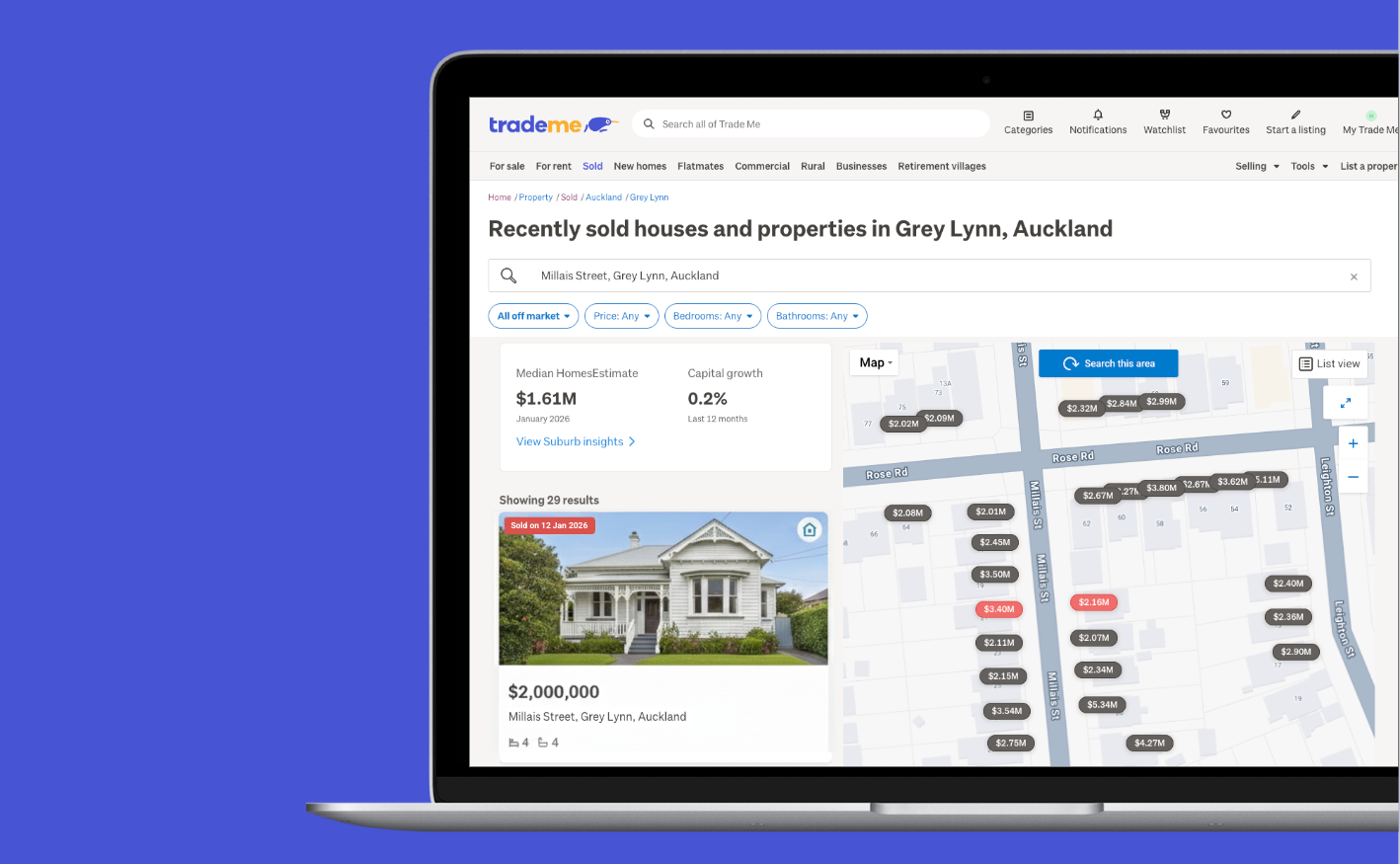
  • Using free tools: Trade Me’s property valuation tool allows property owners and buyers to check out records, rateable values (RVs), estimates and recent sales for over 1.9 million NZ properties.
  • Agent appraisals: If you’re thinking of selling, a local agent will provide an estimate based on their "on-the-ground" knowledge of current buyer demand in your suburb.


Both tools are free and useful, so they're a great place to start. However, if you need the most accurate picture (or if your bank requires it for a loan), you’ll need a registered valuation. These usually start around $1,000, but the price can go up depending on your location, the property’s complexity, or how quickly you need it.

You can do your own research to start with, then call on property valuers if you want a more detailed picture.

What do property valuers look for?

A valuation isn’t a five minute walk through. It’s a comprehensive data exercise. Here's what they’ll likely be analysing:

1. The house

  • Size and layout: It’s not just square meterage; it’s how it’s used. A three-bedroom home with a second bathroom or a dedicated "work from home" office carries more weight in today’s market.
  • Condition & maintenance: Valuers have a keen eye for deferred maintenance. Peeling paint, old wiring, or a roof nearing the end of its life will be noted and deducted from the final figure.
  • Materials: Following our leaky home era, the type of cladding and joinery used is a major factor in risk assessment and value.

2. The land

In many NZ suburbs, the land is worth more than the house sitting on it.

  • Zoning: What can actually be built here? If your section is zoned for high-density (like townhouses), the value could be significantly higher.
  • Topography and risks: With more focus on climate resilience, valuers look closely at flood plains, slope stability, and drainage.
  • Title type: Is it freehold, cross lease, or unit title? Any restrictive covenants can also impact the price.

3. The area

  • School zones: Being on the right side of a school zone boundary can still add a premium to a property's value.
  • Amenity access: How close are you to transport links, green spaces, and "lifestyle" hubs like cafes and shops?
  • Street appeal: The "worst house on the best street" is a cliché for a reason. Valuers look at the surrounding neighbourhood to see if it supports your home's value.

Property valuers will take into consideration the local area when deciding how much your home is worth.

The market context

On top of the physical features, valuers look at the current state of the market. As we’ve seen recently over the last few years, things can change quickly.

Property valuers will take into account market trends at both a national and local level as a crucial element of valuing your property. Valuers will often ring an agent active in a particular market and ask for their thoughts, says Alice. Tommy’s agents go to all the houses for sale at the agency and then see what they sell for so they gather very good valuation information, she says. 

They’ll also look at the economic picture and trends around the specific types of houses buyers are currently hunting for. In their final report, they’ll explain the most important findings to you.

A final tip for buyers: If a valuation comes in lower than you expected, you might still choose to pay a bit more if the house is perfect for you or close to family. As Alice says, "Value can often be in the eye of the beholder."


*We hope this article has provided some helpful information. It's based on our experience and is not intended as a complete guide. Of course, it doesn’t consider your individual needs or situation. If you're thinking about buying or selling a property, you should always get specific advice.

Author

Hannah Hilliam Hannah Hilliam
Content Writer

Hannah is a staff writer at Trade Me, contributing to Trade Me Property. Having bought, sold, and renovated homes herself, she knows first-hand how exciting (and overwhelming) the property journey can be. With a knack for making complex topics feel simple, Hannah focuses on sharing practical, down-to-earth advice to make daunting decisions feel a little less overwhelming.